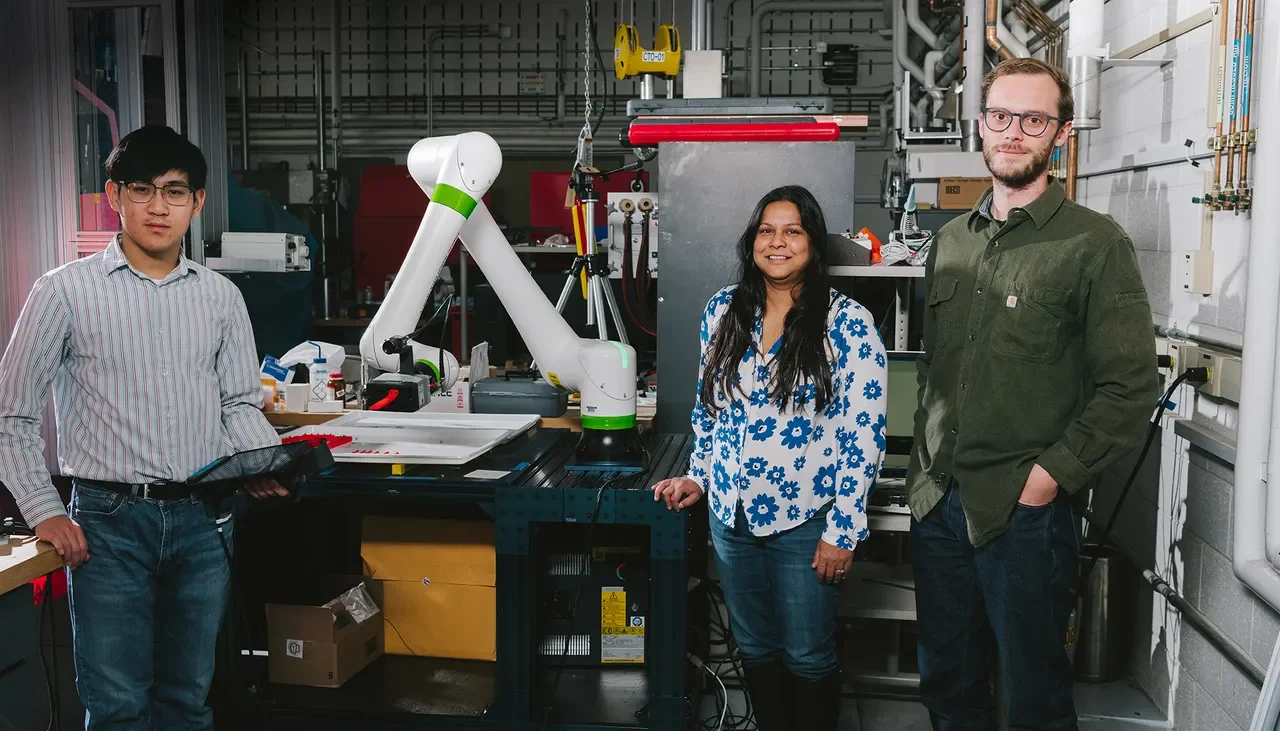
Los Alamos National Laboratory Turns to Robots and AI to Speed Up Materials Innovation
From smartphones to military armor, the materials behind everyday products are advancing faster than ever — and scientists at Los Alamos National Laboratory (LANL) say robotics and artificial intelligence are now essential to keeping pace.
For most consumers, the work of materials scientists is invisible. Yet these researchers determine everything from how durable a phone screen is to how heavy protective gear feels on a soldier’s body. Traditionally, developing those materials can take years. But according to LANL experts, the timeline is shrinking.
“Tech is always evolving,” said Dr. Saryu Fensin, a materials scientist at Los Alamos. “By the time a product comes into fruition, that technology could already be obsolete.”
To stay ahead, LANL researchers are integrating robotics and machine learning into the materials discovery pipeline — automating testing, accelerating experiments, and analyzing thousands of composition possibilities at once. The goal is to create stronger, lighter, and more resilient materials in a fraction of the time once required.
One urgent application is military armor. “There is a need to make lighter armor for our war fighters; currently we are tapped in the materials we can use,” Fensin explained. “The armor that goes into the vest is heavy; it slows them down. If we can come up with a material that is lighter, it can not only save lives but also make our war fighters more effective.”
Beyond defense, the innovations have consumer implications. Fensin pointed to the everyday frustration of dropping a phone without a screen protector. Stronger, more shatter-resistant materials — enabled by advanced robotics and AI-assisted design — could significantly improve durability.
LANL officials say the lab’s move toward automated materials discovery reflects a broader shift across the scientific community, where AI-driven research is beginning to accelerate breakthroughs once thought decades away.