Apptronik Secures $520 Million Backed by Google and Mercedes-Benz as Humanoid Robotics Race Accelerates
The global race to commercialize humanoid robots took another major step forward this week as Texas-based robotics company Apptronik announced a $520 million funding round backed by investors including Google and Mercedes-Benz. The investment underscores growing confidence that humanoid robots may be nearing a transition from experimental prototypes to deployable industrial tools.
The new funding values Apptronik at approximately $5 billion and comes as the broader robotics sector sees renewed momentum around “embodied AI”—the integration of advanced artificial intelligence with physical robotic systems designed to operate in human environments.
From Research Roots to Commercial Push
Founded in 2016 as a spinout from the University of Texas, Apptronik traces its origins to early development work connected to NASA’s Valkyrie humanoid robot program. Over the past decade, the company has focused on designing human-scale robots capable of operating in spaces originally built for people rather than machines.
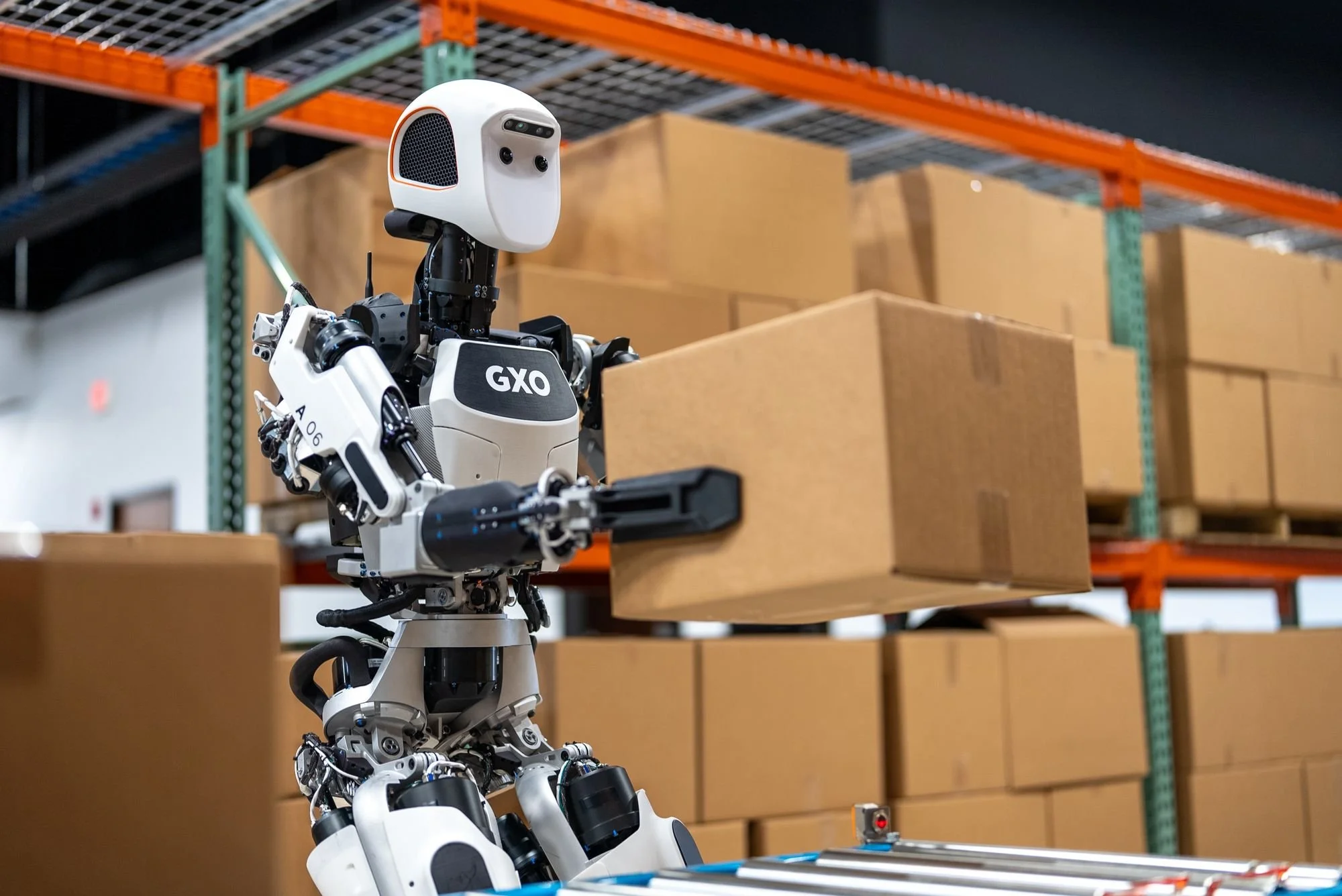
Its flagship platform, the Apollo humanoid robot, combines legs and wheels to navigate industrial environments more efficiently. The design reflects a growing industry belief that robots capable of interacting with existing infrastructure—workstations, shelving systems, and tools—could accelerate adoption by reducing the need for expensive facility redesign.
Chief Executive Jeff Horden said the company expects an increase in real-world deployments across factories and warehouses in the near term, particularly as manufacturers seek solutions to labor shortages and rising operational complexity.
Strategic Partnerships Shape the Roadmap
The funding round includes participation from B Capital and the Qatar Investment Authority, as well as strategic investors such as Google and Mercedes-Benz.
Mercedes-Benz has already entered into commercial agreements with Apptronik, signaling strong interest from the automotive sector in deploying humanoid robots for manufacturing workflows. Logistics provider GXO is another early partner, highlighting demand from warehouse operations where flexible automation remains a major challenge.
Apptronik also plans to deepen its collaboration with Google DeepMind. Under the partnership, Gemini-based artificial intelligence models are being developed specifically for the Apollo platform, combining advanced AI reasoning capabilities with physical-world training data generated through real deployments.
This hardware-software co-development strategy reflects a broader trend in robotics toward vertically integrated systems, where real-world data loops are essential for improving robotic autonomy and reliability.
Scaling Production and Data Infrastructure
The new capital will support development of new Apollo robot versions, expansion of manufacturing capacity, and workforce growth beyond the company’s current staff of more than 300 employees.
Apptronik also plans to build a dedicated robot training and data collection facility in Austin, along with a new office in California. These investments suggest that training infrastructure and data acquisition—long considered bottlenecks in humanoid robotics—are becoming strategic priorities.
Humanoids Move Toward Industrial Reality
The funding arrives amid intense competition in the humanoid robotics sector. Tesla continues to advance its Optimus robot, while Nvidia-backed Figure AI has achieved a reported valuation of $39 billion, signaling strong investor appetite despite the technical and economic challenges still facing the field.
Apptronik’s approach focuses first on industrial use cases, targeting manufacturing and logistics environments where structured workflows and measurable productivity gains provide clearer business cases. Over time, the company aims to expand into assisted care and home applications, a move that mirrors the long-term ambitions of many humanoid developers.
Howard Morgan, general partner at B Capital, noted that Apptronik’s robotic hand design and growing commercial order pipeline provide a competitive advantage in an increasingly crowded field. He also suggested the company’s valuation remains relatively attractive compared to some peers.
The Bigger Picture: Humanoids Enter the Deployment Phase
While the promise of humanoid robots has existed for decades, the industry appears to be entering a new phase defined by commercialization rather than pure research.
Investments from companies like Google and Mercedes-Benz signal a shift toward real-world deployment and operational integration, where success will depend not only on technical capability but also on safety validation, training infrastructure, and measurable return on investment.
As companies race to establish leadership in embodied AI, the next milestone may not be who builds the most advanced humanoid—but who proves they can scale safely, economically, and reliably inside existing industrial ecosystems.
