China Establishes National Standards Committee for Humanoid Robots and Embodied Intelligence
China’s Ministry of Industry and Information Technology (MIIT) has announced the formation of a new standardization technical committee dedicated to humanoid robots and embodied intelligence, marking a significant step in the country’s push to strengthen its global competitiveness in advanced robotics.
The committee is tasked with systematically advancing standards development across the humanoid robotics sector, an area Chinese officials and industry leaders increasingly view as a strategic pillar of future economic growth.
According to Jiang Lei, chief scientist at the Shanghai-based National and Local Co-Built Humanoid Robotics Innovation Center and a member of the new committee, the most urgent standardization needs center on embodied data, operational and task execution capabilities, interfaces for core components, simulation and testing methods, as well as safety and ethics.
“These areas directly affect product compatibility, safety, and large-scale deployment,” Jiang said, noting that fragmented technical approaches across companies have become a major barrier to industrial scaling.
Jiang added that the most prominent gaps in current standards lie in interfaces between datasets and core components, classification of intelligence levels, and testing and inspection equipment. Without common standards, divergent development paths have limited interoperability and slowed widespread adoption of humanoid robotic systems.
Ke Jixing, deputy head of MIIT, said the establishment of the committee comes at a critical moment for the industry. With China’s humanoid robot and embodied intelligence sector developing rapidly, he said stronger standards will help improve the overall standard system, increase the supply of high-quality standards, and better align China’s framework with international norms.
China’s humanoid robot industry experienced what officials describe as “leapfrog development” during the 14th Five-Year Plan period (2021–2025), benefiting from coordinated investments in artificial intelligence, advanced manufacturing, and robotics research.
Xu Xiaolan, president of the Chinese Institute of Electronics (CIE), said humanoid robots represent a convergence of multiple cutting-edge technologies, including AI, semiconductors, sensors, advanced materials, and software. She described humanoid robotics as a representative example of China’s emerging “new quality productive forces.”
Industry forecasts suggest the sector is approaching a commercial inflection point. A recent report indicated that the humanoid robot industry is expected to shift rapidly from technology validation to large-scale commercialization in 2025. The global embodied intelligence market is projected to reach 19.525 billion yuan ($2.78 billion), with China accounting for nearly half. Earlier this year, CIE projected that China’s humanoid robot market could reach approximately 870 billion yuan by 2030.
The move also aligns with broader national policy priorities. The Recommendations of the Central Committee of the Communist Party of China for Formulating the 15th Five-Year Plan emphasize forward-looking planning for future industries, including embodied AI. Analysts noted that the creation of the standards committee closely tracks these policy goals.
In terms of governance, Jiang said the committee will establish unified safety and ethics baselines, apply scenario- and stage-based oversight, and embed safety mechanisms directly into technical standards. The aim, he said, is to enable rapid innovation without crossing safety or ethical red lines, while supporting large-scale industrial deployment.
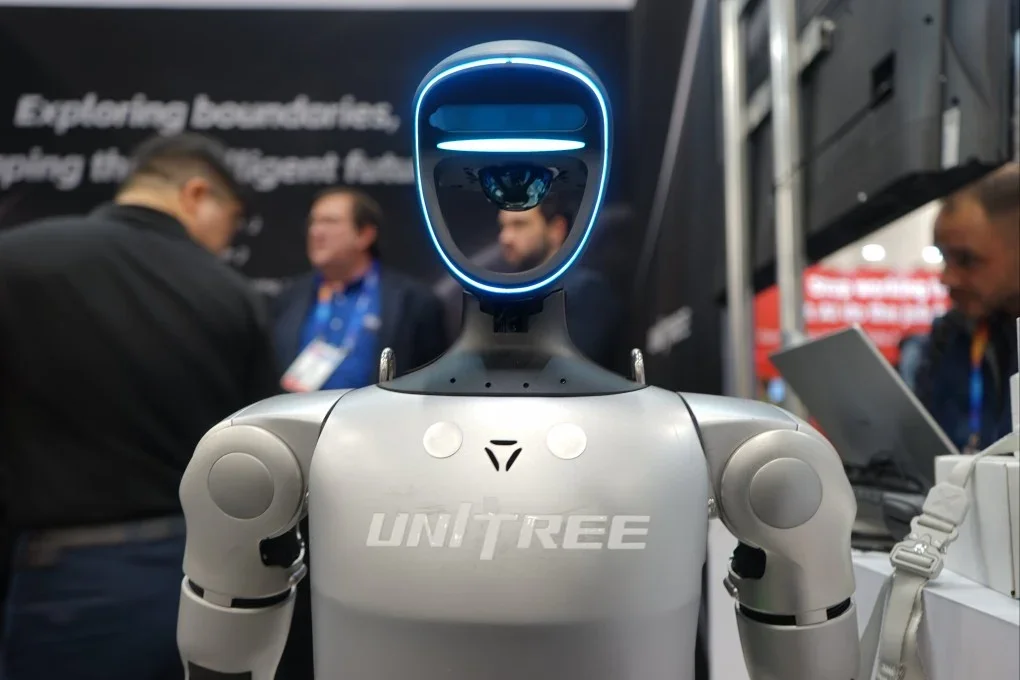
Industry leaders including Wang Xingxing, chairman of Unitree, and Jiao Jichao, vice president of UBTECH, have been appointed as members of the new committee, signaling strong participation from China’s leading humanoid robotics companies.
