EY Launches Global Physical AI Platform and Opens First Dedicated EY.ai Lab, Powered by NVIDIA
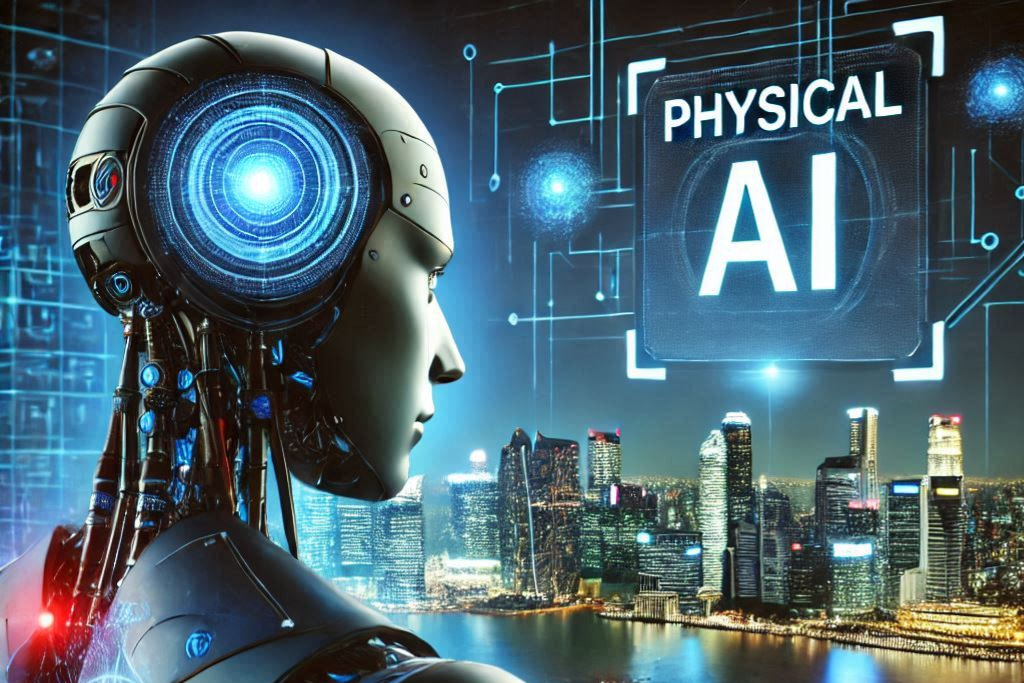
EY has unveiled a sweeping new initiative to accelerate the deployment of physical AI across industries, launching a dedicated platform built on NVIDIA’s accelerated computing stack and opening the first EY.ai Lab devoted entirely to integrating AI with physical environments. The company also announced Dr. Youngjun Choi as the new EY Global Robotics and Physical AI Leader, a move that signals EY’s intention to become a central player in the emerging physical AI economy.
The new platform, developed using NVIDIA Omniverse libraries, NVIDIA Isaac robotics frameworks, and NVIDIA AI Enterprise software, is designed to help organizations safely simulate, test, and deploy AI-driven robots, drones, digital twins, and edge systems at enterprise scale. EY says the effort represents a major expansion of its AI strategy from large language model applications into the rapidly growing world of embodied and real-world automation.
A Full-Stack Approach to Physical AI
While many organizations are experimenting with robotics and AI-driven automation, EY argues that adoption is often slowed by fragmented toolchains, safety concerns, and a lack of consistent governance frameworks. The new EY physical AI platform aims to address those gaps through three core pillars:
AI-ready data: Using synthetic data to generate scenario-rich training sets for physical systems.
Digital twins and simulation: Leveraging Omniverse and Isaac to create realistic 3D environments for modeling, testing, and optimization.
Responsible physical AI: Embedding guardrails for safety, ethics, compliance, and resilience throughout the development lifecycle.
By pairing EY’s industry and regulatory expertise with NVIDIA’s real-time simulation and accelerated computing, the platform will support implementations across industrials, energy, logistics, consumer applications, healthcare, and emerging robotics markets.
Raj Sharma, EY Global Managing Partner for Growth & Innovation, said the combination of technologies is intended to push physical AI beyond pilots:
“This new platform is expected to accelerate how EY helps clients orchestrate these developments responsibly and support them to take the leap from experimentation to enterprise-scale deployment.”
A New Lab to Bridge the Digital and Physical Worlds
At the center of the initiative is the newly opened EY.ai Lab in Alpharetta, Georgia—the first in a planned global network dedicated exclusively to physical AI. The lab is equipped with advanced robotics platforms, high-fidelity sensors, simulation tools, and a full digital-twin environment capable of modeling humanoids, quadrupeds, mobile robots, and next-generation industrial systems.
Organizations will be able to:
Prototype physical AI systems in virtual environments
Simulate “what-if” operational scenarios before deployment
Train robots using Omniverse-based 3D environments
Improve manufacturing, logistics, and maintenance workflows through digital twin ecosystems
NVIDIA’s John Fanelli described the lab as part of a broader shift in industry:
“Enterprises are bringing robotics and automation into the real world to adapt to shifting demographics and boost safety. The EY.ai Lab helps organizations simulate, optimize, and safely deploy robotics applications at enterprise scale.”
Leadership for a New Era of Robotics
EY has appointed Dr. Youngjun Choi—formerly head of the UPS Robotics AI Lab and a research faculty member in aerospace engineering at Georgia Tech—to lead the global rollout of physical AI services. Choi brings deep experience in digital twins, autonomous systems, and enterprise robotics transformation.
Joe Depa, EY Global Chief Innovation Officer, said Choi’s expertise will help set the tone for the new initiative:
“Physical AI requires trusted, AI-ready data and robust governance. With Dr. Choi’s leadership, EY teams are building a true foundation for scalable, enterprise-grade operations.”
A Broader Push Into Enterprise Robotics and AI
The expansion builds on EY and NVIDIA’s earlier partnership around agentic AI platforms and signals EY’s growing commitment to embodied AI, robotics simulation, and real-world automation. The firm plans to extend its capabilities into energy, healthcare, and smart-city infrastructure—areas where digital twins and physical AI could play a major role in sustainability, workforce transformation, and operational efficiency.
With physical AI rapidly emerging as a strategic focus for global enterprises, EY’s new platform, lab network, and leadership investments position the organization as a major advisor in the next phase of the AI industrial revolution.
