Zipline Secures Major U.S. Partnership to Triple Drone Delivery Network Across Africa
Zipline has announced a landmark partnership with the U.S. Department of State that could dramatically scale drone-powered medical delivery across Africa. Through a new pay-for-performance model, the State Department will provide up to $150 million to help build out Zipline’s autonomous logistics infrastructure, enabling African nations to expand rapid delivery of essential medical supplies.
The initiative could triple Zipline’s reach—from 5,000 to 15,000 hospitals and health facilities—and give as many as 130 million people instant access to blood, vaccines, and critical medications.
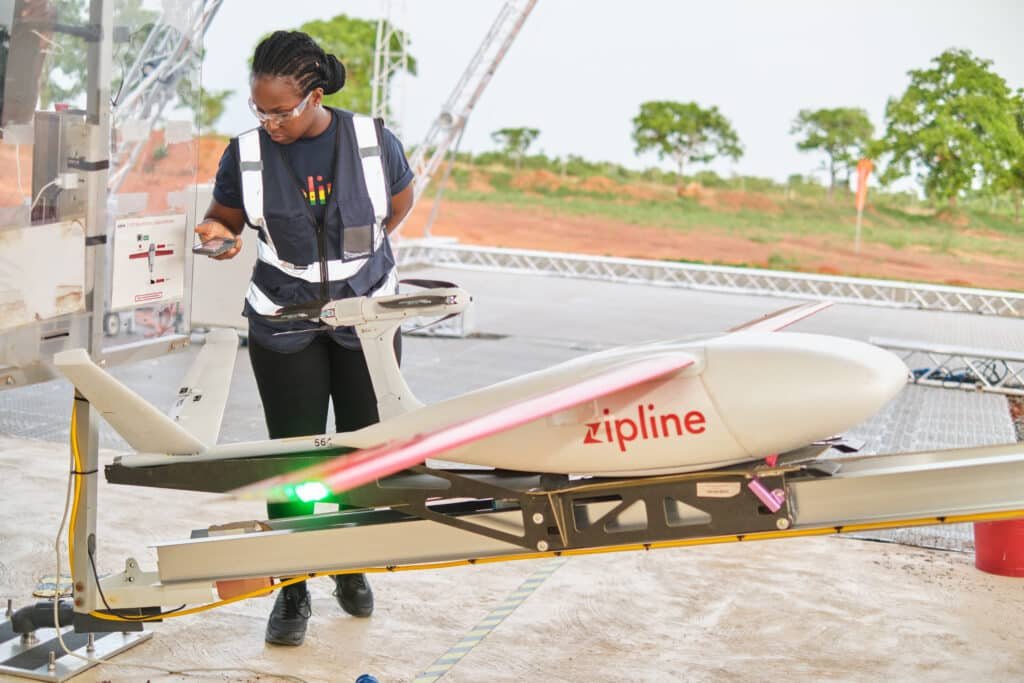
“We started Zipline to build a logistics system that serves all people equally,” said Keller Rinaudo Cliffton, Zipline’s CEO and co-founder. “Today, the U.S. government is doubling down on our work and using our AI, robotics, and autonomous logistics system to improve health outcomes.”
Under the partnership, African governments are expected to contribute up to $400 million in utilization fees to ensure long-term sustainability. The U.S. funds will be released only when expansion contracts are signed and governments commit to paying for ongoing services.
The financing will enable Zipline to construct new delivery hubs—each staffed entirely by local employees and designed to create skilled jobs. Ministries of health across the continent have been contracting and paying for Zipline’s services for nearly a decade, citing improvements in national health systems and economic resilience.
Zipline argues that its autonomous delivery network directly addresses one of Africa’s most persistent public health challenges: slow, unreliable supply chains that leave facilities understocked or reliant on expired materials. In regions where traditional deliveries can take 13 days, Zipline’s system cuts that to under 30 minutes, providing hospitals and community health workers with true on-demand access to life-saving supplies.
Nigeria’s Minister of Health and Social Welfare, Muhammad Ali Pate, said Zipline’s operations in three Nigerian states have already demonstrated dramatic impact—reducing stockouts, enabling new service points in underserved areas, increasing patient visits, and improving treatment outcomes.
Since launching its first delivery in 2016, Zipline has completed 1.8 million autonomous flights with zero safety incidents, solidifying its position as a global leader in autonomous medical logistics.
