From Remote Pilots to True Autonomy: Coco Robotics Pushes Sidewalk Delivery Forward
Delivery robots have become a familiar sight in dense urban areas. Rolling along sidewalks with insulated cargo compartments, they shuttle groceries, takeout, and pharmacy items across neighborhoods. But until recently, most of these systems were not fully autonomous. A human operator — often monitoring remotely — stood ready to intervene when traffic, pedestrians, or unexpected obstacles created uncertainty.
That model is now beginning to shift.
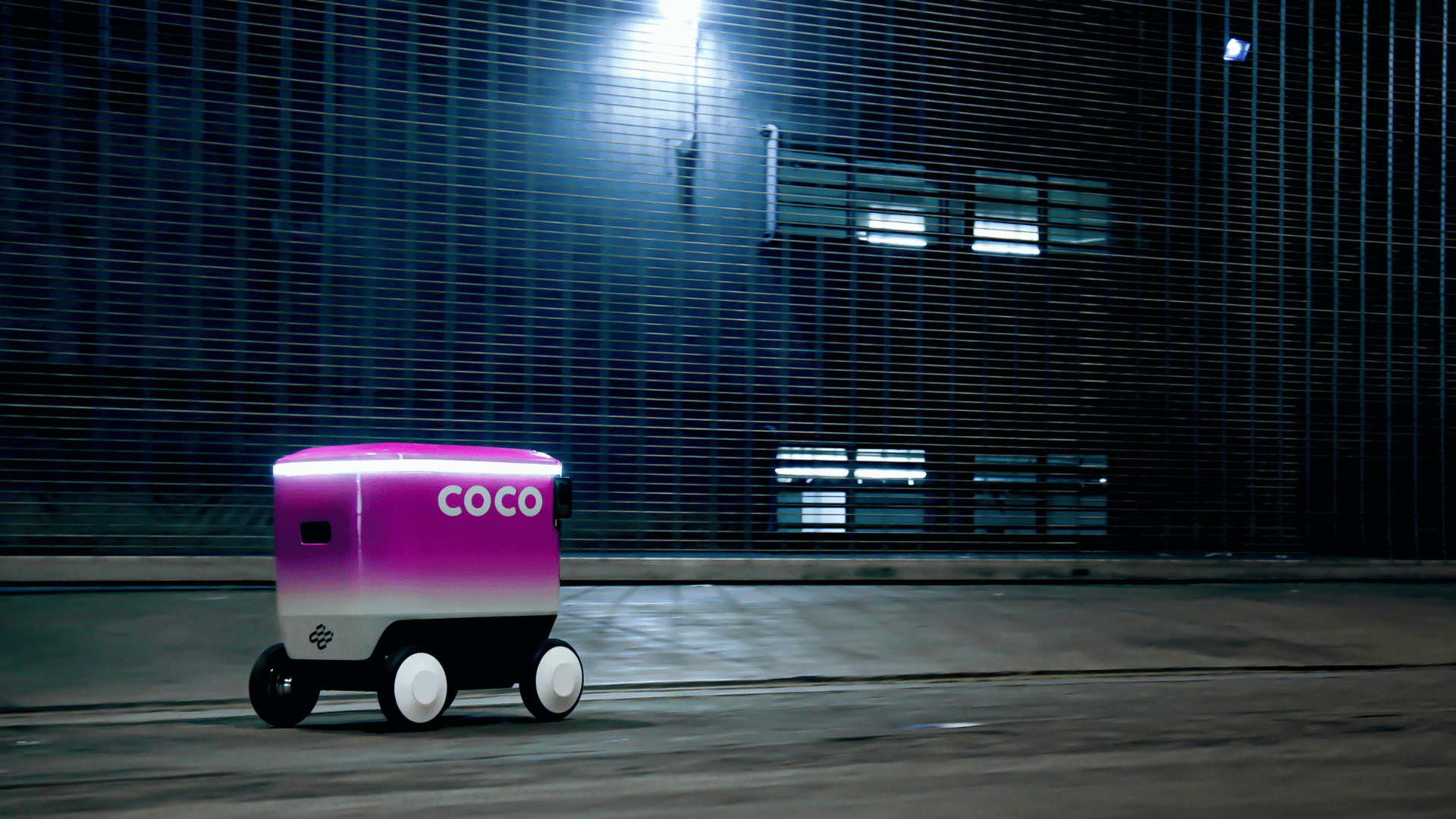
Coco Robotics has introduced Coco 2, a new generation of its delivery platform designed to move beyond human teleoperation and toward true autonomy. The company positions the robot not as a novelty, but as scalable infrastructure for local commerce — a general-purpose tool for grocers, pharmacies, and neighborhood retailers.
Training on the Real World
Urban environments are unpredictable. Flooded intersections, construction zones, aggressive traffic, distracted pedestrians — these are not edge cases in cities; they are daily realities.
Coco Robotics trained its latest system on data gathered from millions of miles driven in cities such as Los Angeles and Chicago. The fleet has already navigated extreme weather conditions ranging from Miami flooding to Midwestern snowstorms. Each incident feeds back into the system’s learning loop.
“Every mile our robots have driven has made the whole fleet smarter,” said Zach Rash, CEO and Co-Founder of Coco Robotics. “Human-in-the-loop learnings have helped us improve with every edge case, creating a feedback loop between deployment, data collection, and model advancements.”
This reflects a broader trend in physical AI: autonomy improves not only through simulation, but through real-world deployment at scale.
Faster Routes, Expanded Access
One of the more practical upgrades in Coco 2 is route flexibility. The robot can now use bike lanes and permitted roadways, potentially cutting delivery times significantly. In urban logistics, small reductions in travel time can materially improve unit economics.
The hardware is also designed for extended uptime and resilience in harsh weather — a critical factor for systems that must operate daily rather than as pilot programs.
Edge Intelligence Meets Simulation
Behind the scenes, Coco is leveraging NVIDIA’s simulation and edge computing infrastructure. The robots train in digital environments before deploying in real-world scenarios, effectively rehearsing interactions with pedestrians, vehicles, and urban obstacles.
Once deployed, Coco 2 relies on onboard processing to make decisions locally, rather than constantly communicating with cloud servers. This reduces latency and improves reliability — both essential for safe navigation in crowded spaces.
“The era of physical AI has arrived,” said Amit Goel, head of strategic partnerships at NVIDIA, “and scaling it requires a seamless loop between massive real-world data and high-performance edge computing.”
The Bigger Shift
What makes Coco 2 notable is not just improved sensors or faster routes. It signals a transition from supervised autonomy to independent operation. The industry is moving from robots that need human backup toward robots that can manage complexity on their own.
For urban delivery, that shift could be significant. Fully autonomous fleets reduce operating costs, improve scalability, and make it possible to deploy robots across multiple cities without scaling remote operations in parallel.
The question now is less whether delivery robots belong on city streets — they are already there — and more about how quickly they can operate independently enough to become invisible infrastructure.
Sidewalk robotics is entering its second phase.
Not remote control.
Autonomy.
