Generalist AI Raises $400 Million to Accelerate the Next Phase of Physical AI
The race to build Physical AI just received another major vote of confidence.
Generalist AI has announced a $400 million funding round at a $2 billion valuation, bringing the company's total funding to more than half a billion dollars. The round was led by Radical Ventures and included participation from 8VC, Union Square Ventures, Hanabi, and a notable group of individual investors, including Fei-Fei Li, Zoom founder Eric Yuan, and Xiaomi co-founder Bin Lin.
Existing investors also doubled down on the company's vision, including NVIDIA's NVentures, Spark Capital, Boldstart Ventures, Bezos Expeditions, and NFDG.
The size of the round reflects growing investor belief that Physical AI—the application of advanced AI models to robots operating in the physical world—could become one of the most important technology markets of the coming decade.
But unlike many AI startups focused on chatbots or digital assistants, Generalist is pursuing a far more difficult challenge: teaching robots to perform useful physical work in unpredictable environments.
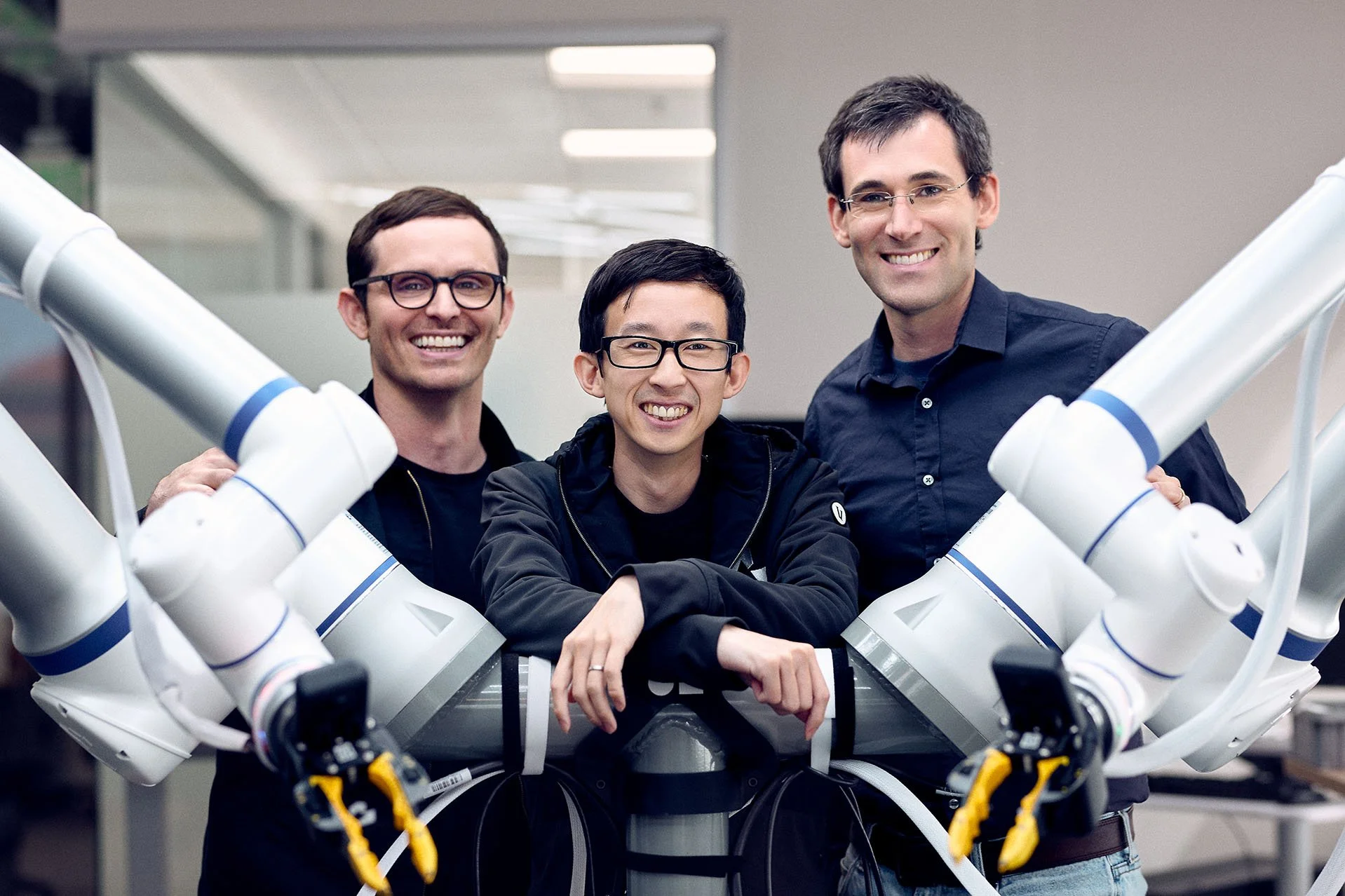
The founders
Beyond Robot Demos
The robotics industry has no shortage of impressive demonstrations.
Humanoid robots can walk, robotic arms can sort objects, and mobile manipulators can complete increasingly sophisticated tasks. Yet most of these systems still struggle when faced with the variability of the real world.
A robot that performs perfectly in a carefully staged demonstration may encounter thousands of unexpected situations once deployed in a warehouse, factory, or logistics operation.
That is the challenge Generalist is trying to solve.
The company's recently introduced GEN-1 model represents an effort to create a more general-purpose robot intelligence capable of learning from large amounts of physical experience and adapting to new situations.
Rather than building software for a single task or robot platform, the goal is to create a foundation model that can transfer knowledge across tasks and environments, allowing robots to become more capable over time.
The latest funding round is intended to accelerate that effort.
Physical AI's Data Problem
One of the central themes of Generalist's announcement is that robot intelligence improves through experience.
This may sound obvious, but it highlights one of the biggest differences between digital AI and Physical AI.
Large language models can be trained on vast quantities of text gathered from the internet. Robots do not have access to a similar resource.
Instead, they must learn through interaction with the physical world.
Every successful grasp, failed pick, dropped object, navigation decision, and completed task becomes part of the training process.
Collecting those experiences is significantly more expensive than collecting text.
Robots move slowly compared to computers. Hardware wears out. Sensors fail. Environments change. Every hour of training requires real-world resources.
As a result, scaling Physical AI is not simply about building larger models. It is about creating systems capable of collecting, managing, and learning from massive amounts of physical experience.
The company's announcement suggests that this is where much of the new capital will be directed.
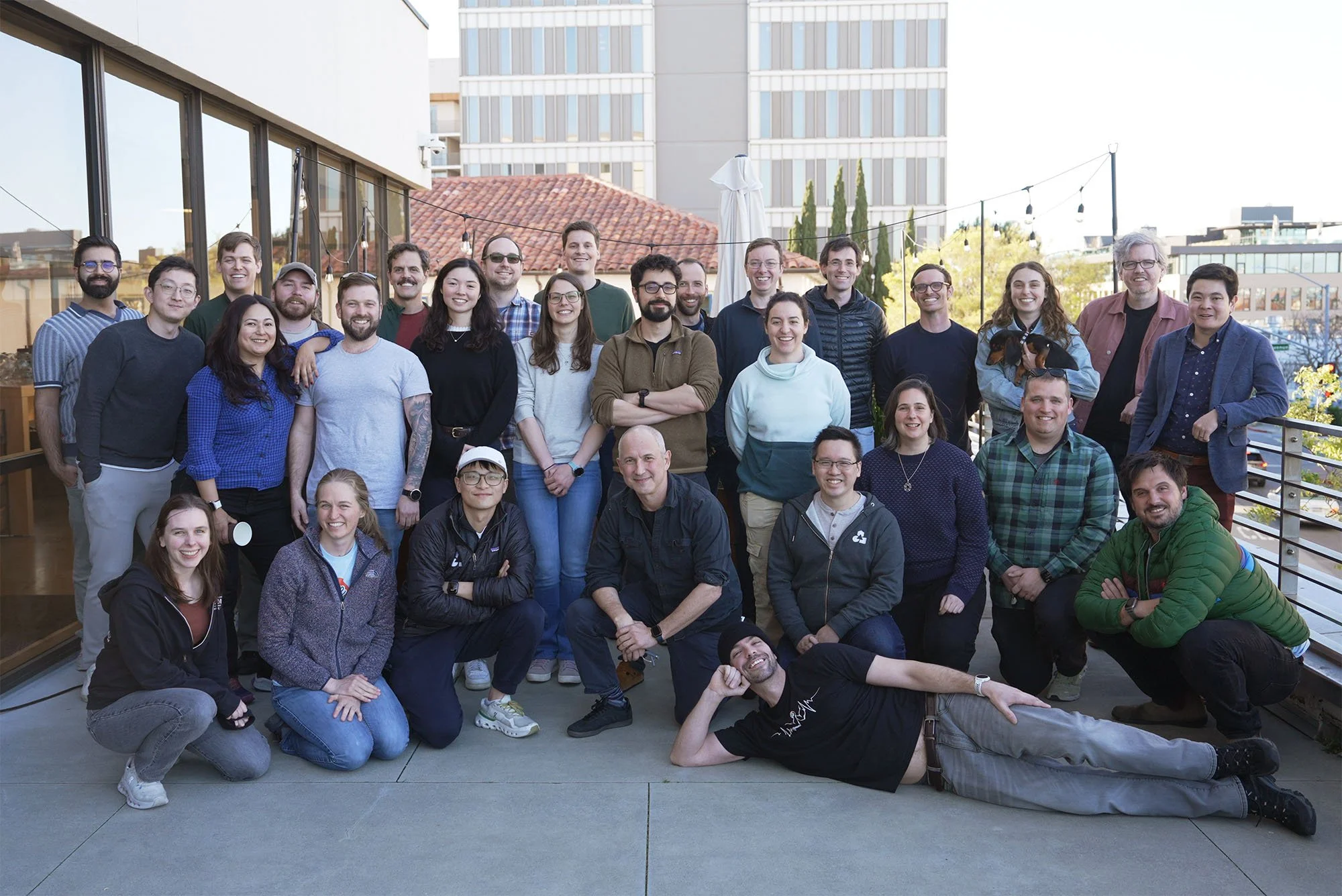
The Whole Team
Why Investors Are Paying Attention
The roster of investors participating in the round offers a glimpse into how Physical AI is increasingly being viewed.
A few years ago, robotics investments were often tied to a specific application—warehouse automation, autonomous vehicles, industrial robotics, or delivery systems.
Today, many investors are placing bets on the underlying intelligence layer itself.
The logic is straightforward.
If foundation models transformed natural language processing, image generation, and software development, a similar approach could potentially transform robotics.
The prize is enormous.
Manufacturing, logistics, construction, agriculture, healthcare, and countless other industries face labor shortages and increasing pressure to improve productivity. A more general-purpose robotic intelligence could allow automation to expand into environments that have historically been too complex or variable for traditional robotics systems.
That possibility helps explain why some of the most influential figures in AI and technology are backing the company.
The Road Ahead
While the funding announcement is significant, it also highlights a broader shift occurring across robotics.
The conversation is increasingly moving beyond whether robots can perform a task and toward whether they can perform it reliably, repeatedly, and at scale.
Building a robot that succeeds once is impressive.
Building a robot that succeeds thousands of times across changing environments is transformative.
That transition represents the next major challenge for Physical AI companies.
For Generalist, the funding provides the resources to continue expanding GEN-1's capabilities and accelerate the collection of the physical experience needed to train future generations of robot intelligence.
For the broader robotics industry, the announcement serves as another reminder that investors believe Physical AI may be approaching an inflection point.
The first wave of robotics innovation focused on building machines that could move.
The second focused on machines that could perceive.
The next phase may be defined by machines that can learn, adapt, and continuously improve through experience.
Generalist's $400 million raise suggests that many investors believe that future is arriving faster than expected.
