For most of its twenty-year history, Kinova has been known for making robots that help people interact with the world. Its assistive robotic arms have enabled individuals with mobility impairments to perform everyday tasks, while its collaborative robot platforms have become familiar tools in research laboratories and automation projects around the globe.
Now the Canadian robotics company is making perhaps its most significant move yet.
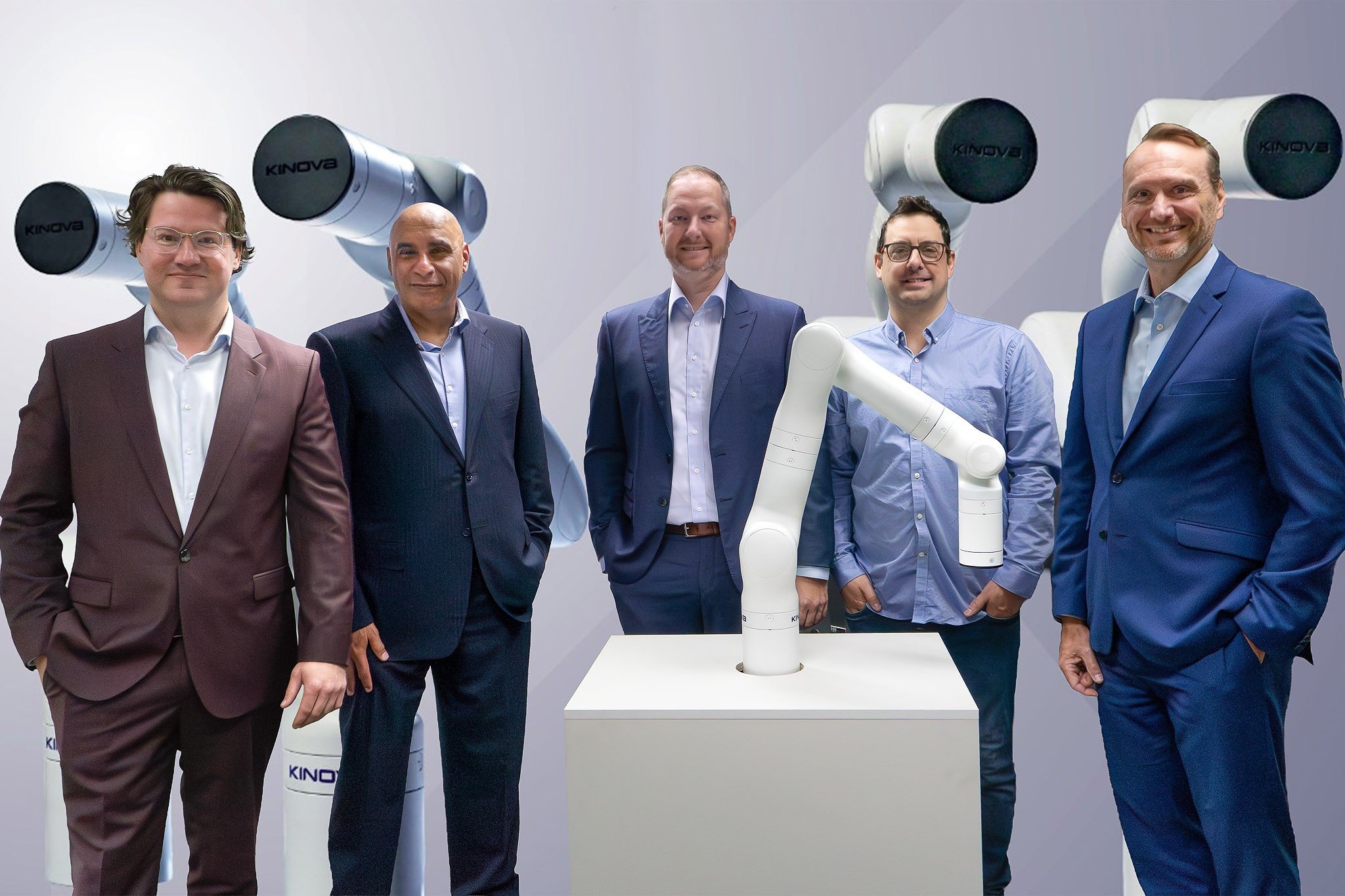
At the Society of Robotic Surgery (SRS) 2026 Annual Meeting, Kinova officially unveiled KIMA, a new robotic arm designed specifically for medical applications. The launch marks more than the introduction of a new product—it represents Kinova's entry into one of robotics' most demanding and highly regulated markets.
From Assistive Robotics to Clinical Precision
Medical robotics is no longer limited to surgical systems. Hospitals and healthcare providers are increasingly deploying robotic platforms across diagnostics, imaging, endoscopy, bronchoscopy, rehabilitation, and minimally invasive procedures. As the market expands, so does demand for robotic components designed specifically for clinical environments rather than adapted from industrial automation.
That distinction sits at the center of Kinova's strategy.
According to the company, KIMA was designed from the ground up for healthcare applications. Rather than modifying an industrial robot for medical use, Kinova developed a platform that incorporates medical software and safety requirements at its foundation.
The robotic arm supports a payload class of 3 kilograms while maintaining a lightweight design of less than 13 kilograms. It also eliminates the need for large external control cabinets, reducing the physical footprint of systems built around the arm.
For medical device manufacturers, these design decisions could simplify integration and accelerate development timelines for new clinical products.
Building for Regulation from Day One
One of the biggest challenges facing medical robotics companies is navigating regulatory and safety requirements.
KIMA incorporates IEC 62304 Class C software processes and ISO 14971 risk management principles, two standards commonly associated with safety-critical medical devices. By embedding these requirements into the platform itself, Kinova is positioning KIMA as a foundation upon which original equipment manufacturers (OEMs) can build regulated medical products.
" KIMA represents a shift in how medical robotics should be built," said François Boucher, Vice President at Kinova. "We designed this robotic arm specifically for clinical realities, applying absolute quality manufacturing standards to pave the way for technologies better aligned with the needs of patients and practitioners."
The approach reflects a broader trend within healthcare robotics. As robotic systems move beyond specialized surgical platforms and into routine clinical workflows, manufacturers increasingly need modular components that already account for regulatory requirements.
An Ecosystem Approach
The launch also highlights another reality of modern robotics development: few companies build complete systems alone.
Kinova has assembled a network of technology partners that includes QNX, RTI, MedAcuity, MPE, and Acontis. Together, these organizations provide software, connectivity, integration, and engineering capabilities designed to reduce complexity for developers building medical devices around the platform.
This ecosystem approach mirrors strategies increasingly seen across robotics, where success depends not only on hardware performance but also on the availability of software tools, safety frameworks, and integration support.
For startups, it may lower barriers to entry. For larger medical technology companies, it may reduce development risk and time-to-market.
A New Chapter for Kinova
Founded in 2006 in Boisbriand, Quebec, Kinova has built its reputation on human-centered robotics. Its products have been used in assistive technology, research, and collaborative automation, with all design, development, and assembly taking place in Canada.
The launch of KIMA suggests the company sees healthcare as a major growth opportunity over the next decade. Medical robotics remains one of the fastest-growing segments of the broader robotics industry, driven by aging populations, clinician shortages, and demand for more precise and minimally invasive procedures.
For Kinova, entering this market is both a natural extension of its mission and a significant strategic expansion.
"The important thing is not the size of the steps we take, but the willingness to keep moving forward, one step at a time, in the same direction," said Kinova CEO and Co-founder Charles Deguire.
Twenty years after its founding, Kinova's next step appears aimed squarely at the operating room, the imaging suite, and the future of robotic healthcare.
