Hyundai, State Lenders Back $5.9B Push to Build Robotics and AI Hub in Saemangeum
Hyundai Motor Group is accelerating plans to transform South Korea’s Saemangeum region into a major industrial hub for robotics, artificial intelligence, and clean energy, supported by a coalition of state-run financial institutions.
The company announced Monday that it has signed a memorandum of understanding with four policy lenders — Korea Development Bank, Export-Import Bank of Korea, Industrial Bank of Korea, and Korea Credit Guarantee Fund — to establish a financing and cooperation framework for the multibillion-dollar project.
The agreement supports Hyundai’s previously announced 8.9 trillion won ($5.9 billion) investment in Saemangeum, a coastal development zone in North Jeolla Province. The initiative is part of the company’s broader five-year domestic investment plan totaling 125.2 trillion won ($82.6 billion).
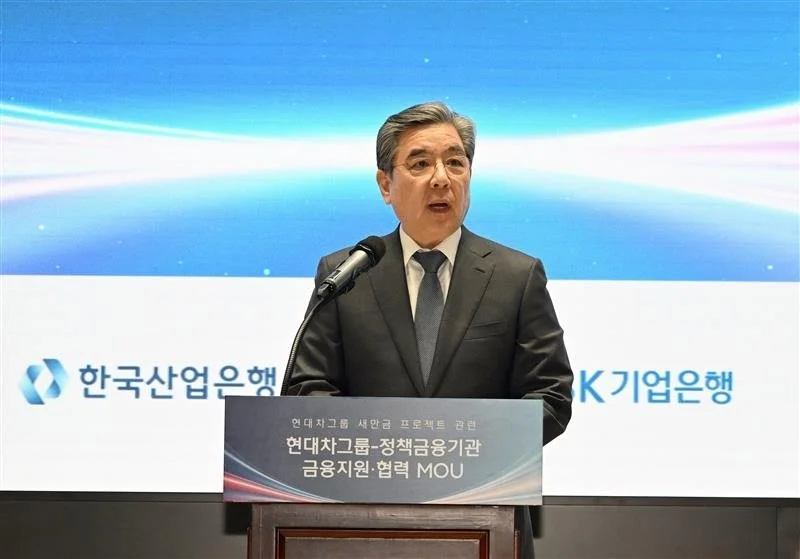
Hyundai Motor Group Vice Chair Chang Jae-hoon speaks during the MOU signing ceremony with the Korea Development Bank, Export-Import Bank of Korea, Industrial Bank of Korea and Korea Credit Guarantee Fund for the Saemangeum project in Yeouido, Seoul on Monday. (Hyundai Motor Group)
Building a “Physical AI” Ecosystem
At the center of the Saemangeum project is a large-scale push into what Hyundai describes as “physical AI” — the integration of artificial intelligence into machines such as robots and industrial systems.
The investment will be deployed in phases beginning next year and includes:
5.8 trillion won ($3.8 billion) for an AI data center capable of supporting up to 50,000 GPUs
400 billion won ($264 million) for a robotics manufacturing cluster with capacity for 30,000 robots annually
1 trillion won ($660 million) for a hydrogen energy facility
A 1-gigawatt solar power plant
The region itself is targeting 10 gigawatts of renewable energy capacity by 2030, positioning it to support energy-intensive infrastructure such as AI data centers and hydrogen production.
Hyundai’s vertically integrated approach — combining data infrastructure, robot manufacturing, and clean energy — is designed to improve control over cost, scalability, and supply chains.
Public-Private Partnership Model
Under the agreement, Hyundai will act as the anchor investor, while the state-backed lenders will provide structured financing, guarantees, and support for smaller firms entering the ecosystem.
Korea Development Bank will lead overall financing and structuring
Industrial Bank of Korea will focus on small- and mid-sized enterprise funding
Export-Import Bank of Korea will support global expansion
Korea Credit Guarantee Fund will provide financial guarantees
The model reflects a broader South Korean strategy of pairing public financing with private-sector execution to build industrial capacity in emerging technologies.
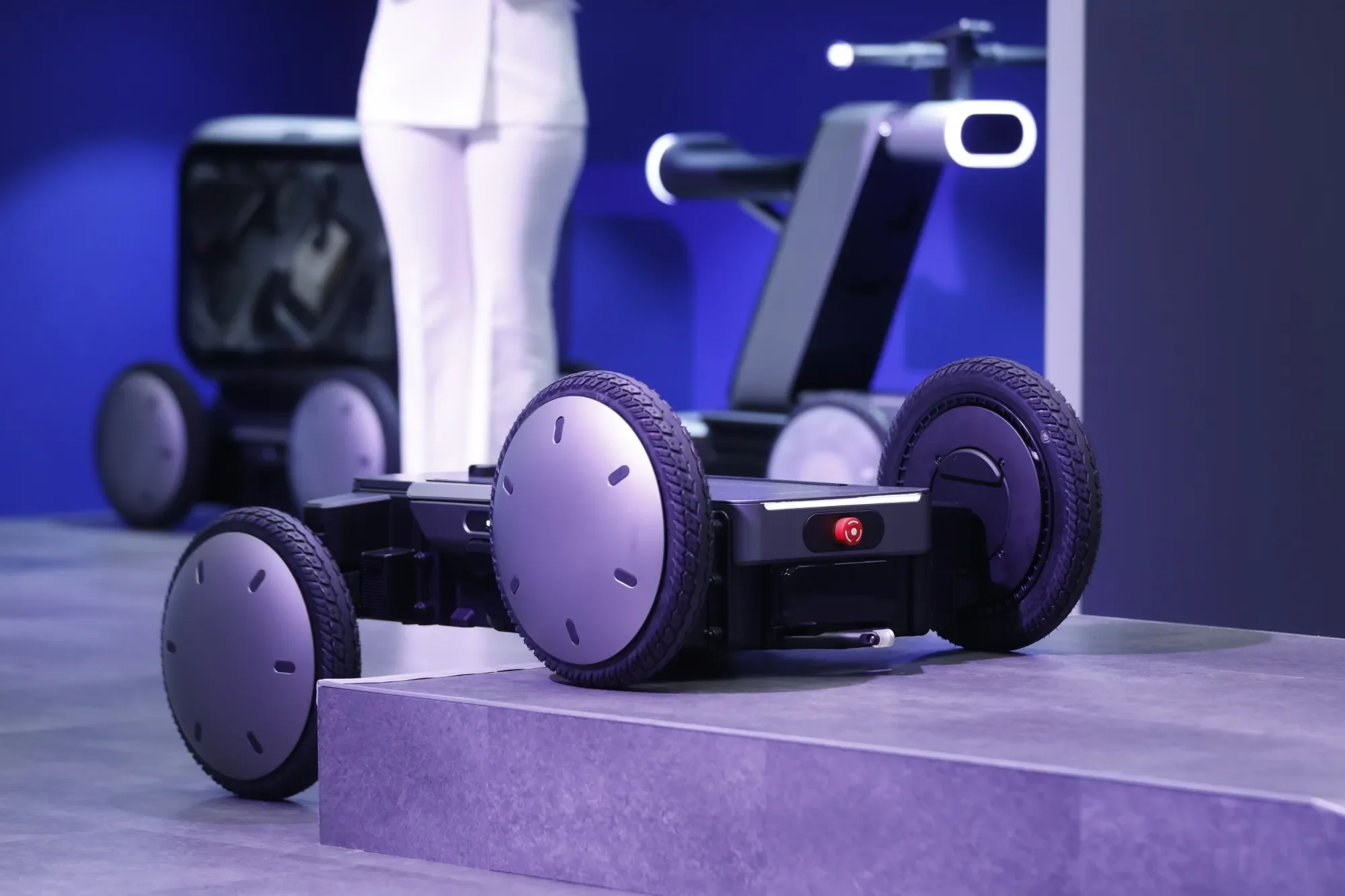
Hyundai’s Four-Wheeled Platform Robot Will Go On Sale Next Year
Strategic Positioning
Hyundai executives emphasized the strategic advantages of Saemangeum, including access to large-scale renewable energy, integrated port logistics, and plans for a new city with a projected population of 700,000.
Vice Chair Chang Jae-hoon said the rapid participation of multiple policy lenders — finalized just over a month after the initial investment announcement — highlights strong alignment between government and industry.
The project also places Hyundai in closer competition with global players investing in robotics and AI-driven manufacturing systems, including efforts by companies such as Tesla.
What Comes Next
Hyundai has established a dedicated internal organization to oversee the Saemangeum initiative and is working with a government task force on approvals, infrastructure development, and policy coordination.
While construction is expected to begin next year, the company said detailed planning for robotics production, scaling, and potential export strategies is still underway.
If successful, the Saemangeum project could serve as a blueprint for how industrial companies integrate AI, robotics, and energy systems into a unified production ecosystem — a model increasingly central to the next phase of global manufacturing.
