Kroger Scales Back Ocado Partnership as Online Strategy Shifts Toward Store-Based Fulfillment
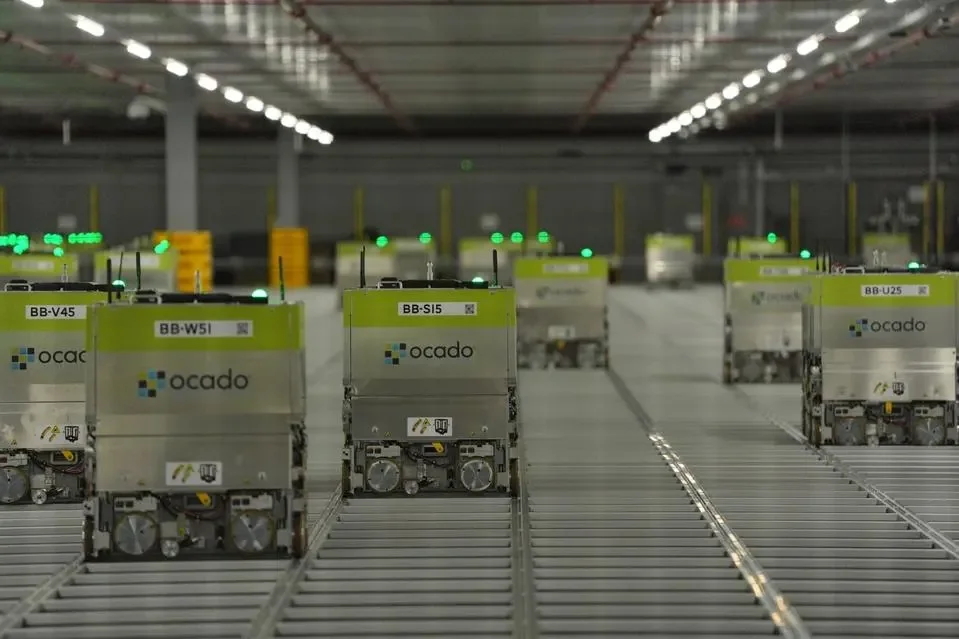
Kroger is scaling back its high-profile partnership with U.K. automation specialist Ocado, closing three automated customer fulfillment centers (CFCs) and shelving plans for a broader rollout of large robotic warehouses in the United States. The move marks a significant pivot in the grocer’s online strategy and follows an operational review that found the Ocado-powered facilities were not meeting internal financial expectations.
As part of the adjustment, Kroger will make a one-time $350 million payment to Ocado in January to settle obligations related to the canceled facilities. The payout includes $250 million previously announced and reflects a recalibration of the long-term economics of the partnership. Kroger also disclosed it would take a $2.6 billion impairment charge tied to its changing online strategy and asset writedowns at the automated sites.
The company emphasized that it remains committed to digital growth, but said the shift acknowledges that highly automated, centralized warehouses have not scaled as planned. Kroger now intends to fulfill a greater share of online grocery orders through its existing network of more than 2,700 stores, a model that has proved faster and more cost-effective, particularly as customers increasingly choose pickup services.
Ocado said it will continue operating five active U.S. sites for Kroger, with a sixth facility in Phoenix still scheduled to open next year. However, a planned CFC in Charlotte, North Carolina, has been canceled entirely.
Launched in 2018, the Kroger–Ocado partnership once envisaged up to 20 automated hubs across the U.S., positioning Ocado’s robotics and routing technologies as a potential leapfrog opportunity in e-commerce. Early results were promising, but order volumes remained below projections, especially in regions where Kroger’s market share is smaller and online adoption is uneven. The financial pressures were compounded by rising logistics costs and fluctuating consumer demand amid persistent food inflation.
Kroger’s most recent earnings showed modest sales growth but tightening margins, driven by higher labor costs, promotional activity and a competitive landscape dominated by Walmart, Costco and Amazon. The company also continues to prepare for its proposed merger with Albertsons, which remains under regulatory review.
By reducing its Ocado footprint, Kroger aims to redirect capital toward investments with more predictable returns, including store upgrades, private-label programs and digital loyalty initiatives. The grocer has also been testing smaller delivery spokes designed to support store-based fulfillment without the cost of large automation hubs.
For Ocado, the shift represents a setback in its largest international contract. The company reaffirmed its goal of generating positive cash flow in fiscal 2026 and said it will continue pursuing growth in other global markets. Shares in Ocado rose initially on news of the payment but remain down more than 40% this year.
The recalibration highlights broader questions about whether large, capital-intensive automated warehouses can deliver competitive economics in the U.S., a market shaped by vast geography, variable consumer behavior and the dominance of retailers with extensive store networks. While Ocado continues to serve partners in the U.K., Japan, France, Australia and Canada, none matches the strategic significance of a full-scale U.S. deployment.
As Kroger refocuses on proximity-based fulfillment and flexible in-store operations, Ocado now faces the challenge of demonstrating that its automation model can compete in a market where speed, density and cost remain the decisive factors in online grocery.
