NASA Backs Modular Robotics for Space: HEBI Robotics Wins Phase II SBIR to Advance Space-Ready Actuation
NASA has awarded HEBI Robotics a Phase II Small Business Innovation Research (SBIR) contract worth $850,000 over two years, continuing its investment in modular robotic actuation technology designed for the extreme conditions of space.
The project focuses on developing flight-ready actuation hardware — including control electronics and modular components — capable of operating in low Earth orbit (LEO) and geosynchronous orbit (GEO). By advancing space-rated robotics infrastructure, the initiative aims to accelerate the development of robotic systems that can perform critical tasks such as in-space servicing, assembly, and maintenance (ISAM).
Engineering for the Harsh Reality of Space
Robotics systems destined for space face challenges far beyond terrestrial deployments. Ionizing radiation, vacuum conditions, and extreme temperature fluctuations place significant demands on mechanical and electronic systems. Traditional lubricants used in gear systems, for example, can outgas in vacuum environments, leading to performance degradation or failure.
NASA’s continued investment signals the growing importance of reliable robotic manipulation in orbit. Space-based robotics are increasingly viewed as essential infrastructure for deploying equipment, assembling structures, and maintaining aging satellite systems.
HEBI Robotics’ approach centers on modular actuation — designing interoperable components that integrate seamlessly within the company’s ecosystem and with third-party systems. The goal is to reduce development timelines and lower barriers for building complex robotic systems capable of operating in space environments.
“Creating actuation technology that can withstand the harsh environment of space expands our modular hardware platform,” said Andrew Willig, Director of Hardware at HEBI Robotics. “This enables agile production of complex robotic systems for space applications that would otherwise require long, multi-million-dollar development cycles.”
From Research to Flight-Ready Systems
The Phase II award follows successful completion of an earlier Phase I SBIR project, where initial research demonstrated promising results for space-ready actuators. Phase II funding is typically reserved for technologies that show strong technical viability and clear potential for commercialization.
NASA has previously collaborated with HEBI Robotics on projects such as the “Superball” mobile robot, underscoring an ongoing relationship focused on modular robotics architectures.
Beyond the immediate scope of the SBIR contract, the work contributes to broader initiatives such as NASA’s ARMADAS program — an effort to develop autonomously assembling robotic materials capable of constructing infrastructure in space, including habitats, antenna arrays, and future spaceports.
Robotics as Infrastructure for the Space Economy
As national and international interest in orbital construction, lunar missions, and Mars exploration grows, robotics is increasingly positioned as a foundational technology rather than an experimental add-on.
Robotic actuators and manipulators will play central roles in deploying solar panels, servicing satellites, assembling structures, and enabling sustained operations in environments where human intervention is limited or impractical.
NASA’s SBIR program supports this vision by enabling small businesses to advance innovative technologies while diversifying the nation’s supplier ecosystem. Phase II projects represent a transition point — moving technologies from research toward operational readiness and commercial viability.
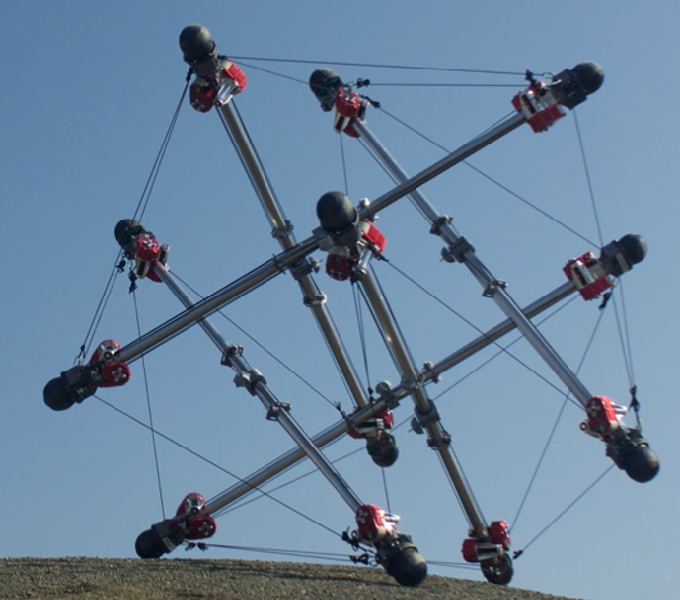
HEBI has prior experience with NASA with projects such as this “Superball” mobile robot constructed with HEBI actuators.
Terrestrial Benefits Beyond Space
Although designed for space environments, the technology may also have significant Earth-based applications. Radiation-hardened actuators developed through the project could support inspection and maintenance tasks in nuclear facilities, where robotics increasingly play a role in reducing human exposure to hazardous conditions.
HEBI Robotics’ broader mission focuses on simplifying robotics development by providing modular hardware and software tools that allow engineers to rapidly create robust robotic systems without extensive specialized training.
As the space industry shifts toward scalable infrastructure and sustained operations beyond Earth, investments like this highlight a broader trend: robotics is becoming the backbone of future space activity — enabling capabilities that extend beyond what humans alone can achieve.
