The next phase of the robotics revolution may be taking shape inside a virtual world.
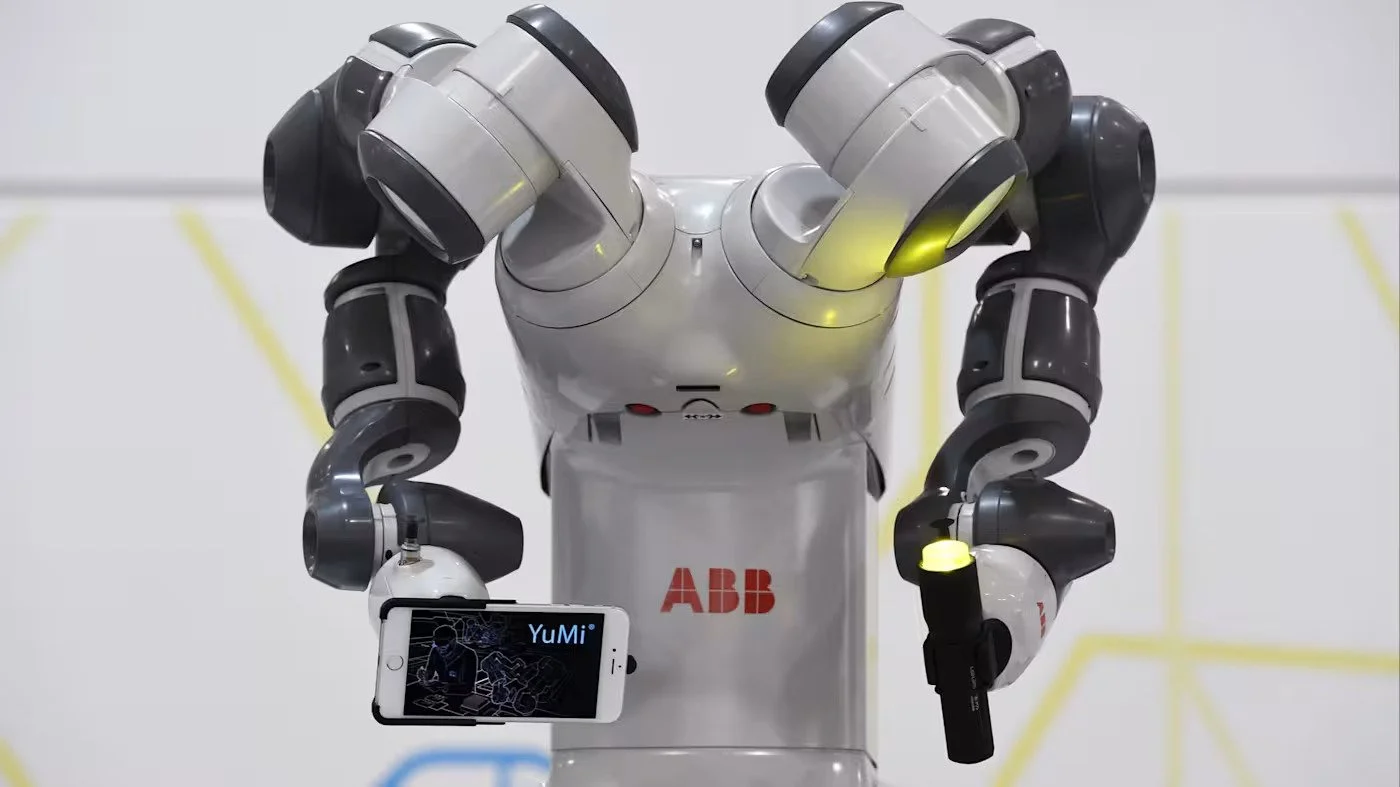
Nvidia and ABB Robotics have announced a partnership to develop a new generation of autonomous industrial robots, combining ABB’s robot training software with Nvidia’s Omniverse simulation platform. The goal is to create robots that can be trained in realistic digital environments before being deployed into factories, warehouses, and logistics operations.
The companies say the approach could dramatically accelerate the adoption of robotics—especially among small and medium-sized manufacturers that have historically struggled with the cost and complexity of automation.
Training Robots in the Metaverse
At the heart of the collaboration is the integration of ABB’s RobotStudio software with Nvidia’s Omniverse, a simulation platform designed to build highly detailed digital replicas of real-world systems.
Using these tools, companies can create “digital twins” of factory environments and train robots virtually before they ever touch the production floor. Robots can learn tasks such as moving objects between stations, navigating factory layouts, or coordinating with other machines.
Because the training happens in simulation, companies can run thousands of scenarios quickly—something that would be expensive or dangerous to do with real machines.
The system, dubbed RobotStudio HyperReality, is designed to narrow the performance gap between simulated training environments and real-world robots. According to ABB Robotics president Marc Segura, closing this gap is critical to making physical AI practical at scale.
If robots trained in simulation behave the same way when deployed in real factories, companies can dramatically reduce the time and cost required to implement automation.
Foxconn Begins Early Trials
One of the first companies testing the new system is Taiwanese electronics manufacturer Foxconn, best known as a major supplier for Apple products.
Foxconn is trialing the robots as part of its broader effort to automate more of its manufacturing processes. The machines are expected to become commercially available in the second half of the year.
According to Nvidia’s vice-president of robotics and edge AI, Deepu Talla, the system represents a significant step toward fully autonomous industrial robots—machines capable of performing tasks without constant human programming or supervision.
The initial focus is on practical factory tasks such as moving parts, handling materials, and coordinating workflows across multiple robotic arms.
Lowering the Cost Barrier
Cost has long been one of the biggest obstacles to widespread industrial robot adoption.
Installing robotic arms can range from about $40,000 for collaborative robots—known as cobots—to as much as $500,000 for large industrial systems, depending on complexity and integration requirements.
These costs often put automation out of reach for smaller manufacturers.
By allowing robots to be trained and optimized in virtual environments before deployment, the Nvidia–ABB system could reduce integration costs and shorten installation timelines. The companies argue that this could make robotics accessible to a much broader range of industries.
Robotics as the Next Big AI Market
For Nvidia, the partnership is part of a much larger strategy.
Chief executive Jensen Huang has repeatedly described robotics as a “multitrillion-dollar opportunity”, arguing that the combination of AI software, simulation platforms, and advanced computing hardware will transform manufacturing, logistics, and transportation.
The semiconductor company has already partnered with several major robotics and automation players, including Uber, LG Electronics, Boston Dynamics, and humanoid robotics startups such as Figure AI and Skild AI.
Through platforms like Omniverse, Nvidia is positioning itself not just as a chip supplier but as the software backbone for the emerging physical AI ecosystem.
Challenges Still Remain
Despite the optimism, analysts caution that major obstacles still stand in the way of widespread deployment.
Robotics systems must prove their reliability in demanding industrial environments, where precision components can wear out quickly. Energy requirements, workforce training, and integration challenges also remain significant barriers.
Regulators may also raise concerns about safety and the potential impact of automation on employment.
Still, proponents argue that advances in physical AI could help Western manufacturers compete with China’s rapidly expanding industrial automation sector, particularly by addressing persistent labor shortages in skilled manufacturing roles.
If successful, the Nvidia–ABB partnership may mark an important step toward a future where robots learn their jobs in digital worlds before stepping onto the factory floor.
