For the past four years, most discussions about military drones have focused on what happens in the sky. Images from Ukraine have been dominated by FPV strike drones, long-range attacks against strategic targets, and naval drones reshaping operations in the Black Sea.
But the next major transformation may happen on the ground.
The British Army recently confirmed that it has completed the first phase of a research and development program focused on land drone swarms, a capability specifically highlighted in the United Kingdom's 2025 Strategic Defence Review. While the announcement received little attention outside defense circles, it represents a significant milestone in how modern militaries are thinking about autonomy, robotics, and future battlefield operations.
The goal is ambitious: create a British Army that is "10 times more lethal" by combining traditional armored forces with artificial intelligence, autonomous systems, long-range weapons, and coordinated swarms of robotic platforms.
The future battlefield is increasingly becoming a human-machine team.
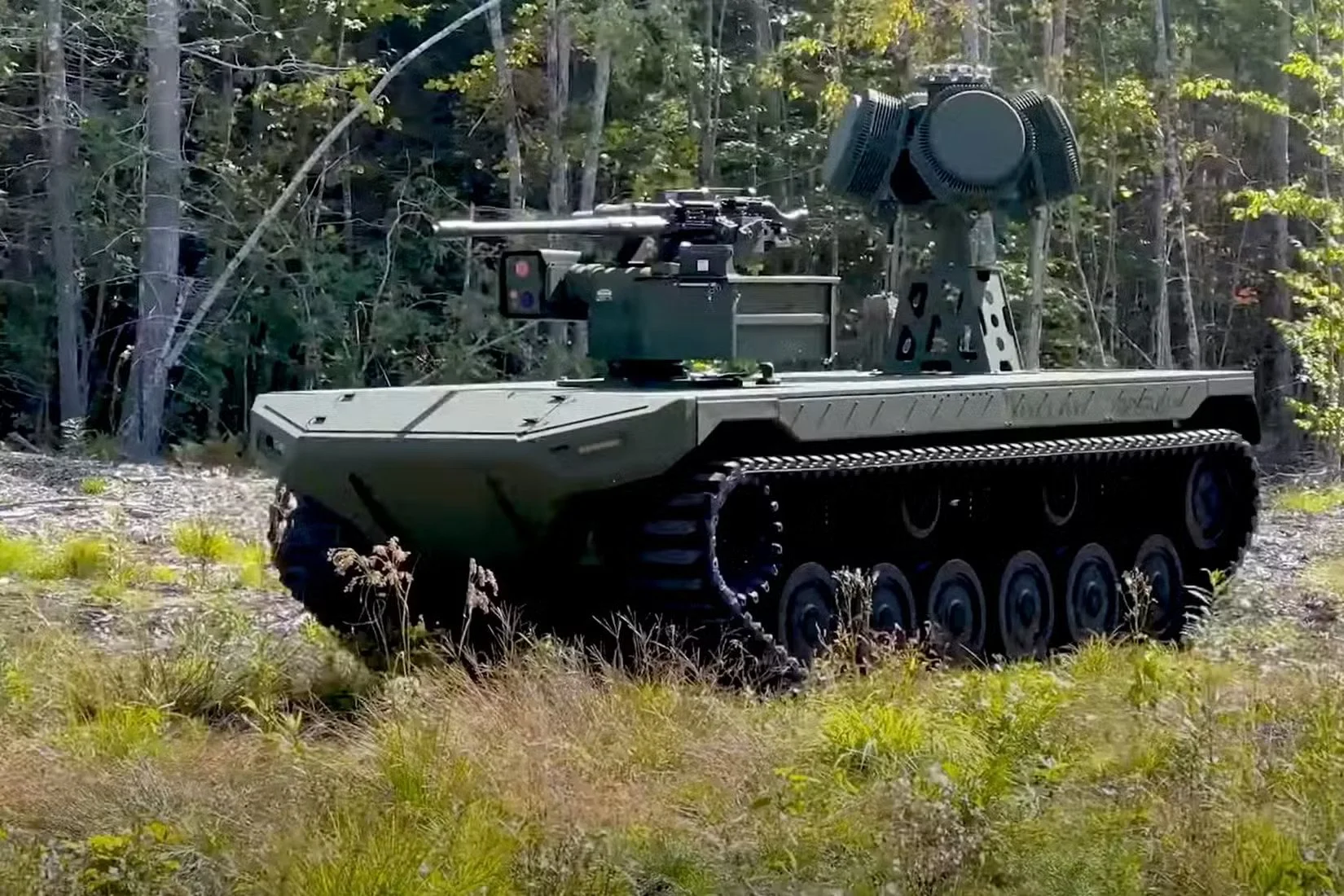
From Individual Robots to Robotic Formations
Military organizations have spent years experimenting with individual ground robots.
These systems have been used for bomb disposal, reconnaissance, logistics support, and surveillance. What is changing now is the move from single robots to coordinated groups of robots operating together.
The British Army's first development phase focused on creating a software-defined swarm testbed—a framework that allows multiple robotic systems to communicate, coordinate, and operate as a collective force.
That may sound straightforward, but ground swarms are significantly more difficult than aerial swarms.
Aerial drones operate in relatively open space. Ground robots must navigate trenches, mud, rubble, destroyed infrastructure, vegetation, minefields, and urban obstacles. They must maintain communications despite terrain interference and electronic warfare. They must adapt when individual vehicles become disabled or lose connectivity.
Building a ground swarm is less about controlling robots and more about orchestrating a constantly changing robotic ecosystem.
The software challenge may ultimately be more important than the hardware itself.
Ukraine Is Showing Why Ground Robotics Matter
The strongest argument for robotic ground systems is not coming from laboratories. It is coming from Ukraine.
According to figures released by Ukraine's Ministry of Defence, more than 24,000 uncrewed ground vehicle missions were conducted during the first three months of 2026 alone.
These systems are performing tasks that would traditionally place soldiers at risk:
Delivering ammunition
Carrying batteries and supplies
Transporting water
Evacuating wounded personnel
Conducting reconnaissance
Supporting mine-clearing operations
Establishing defensive positions
Perhaps most importantly, they are reducing human exposure.
Modern battlefields are increasingly transparent. Persistent surveillance, FPV drones, loitering munitions, and sensor networks make movement dangerous. Simply crossing open terrain can expose personnel to detection and attack.
Ground robots provide an alternative.
A robotic vehicle can transport supplies across a dangerous corridor multiple times without risking a driver, medic, or infantry soldier. In many scenarios, preserving personnel is becoming just as important as defeating an adversary.
The 20-40-40 Army
One of the most interesting concepts in the Strategic Defence Review is the proposed 20-40-40 force structure model.
Under this framework:
20% consists of traditional crewed platforms.
40% consists of reusable autonomous systems.
40% consists of consumable systems such as missiles, munitions, and one-way drones.
The model recognizes a reality already visible in Ukraine.
Future military capability will not be measured solely by the number of tanks, armored vehicles, or aircraft a nation possesses. It will increasingly depend on the ability to generate, deploy, coordinate, and replace autonomous systems at scale.
In this vision, robots are no longer supporting assets.
They become part of the force structure itself.
Swarms Require Standards
As exciting as swarm technology appears, the greatest challenge may not be robotics—it may be interoperability.
Future military operations will involve autonomous systems from multiple manufacturers operating simultaneously across land, air, maritime, and logistics environments.
Questions quickly emerge:
How do robots share mission information?
How do they coordinate movement?
How do operators maintain supervisory control?
How are failures reported?
How do systems remain secure under electronic attack?
How can allied nations deploy different robotic systems together?
These are not simply engineering questions. They are standards questions.
Military robotics is beginning to encounter many of the same challenges that commercial robotics faces today. Autonomous systems become significantly more valuable when they can communicate, coordinate, and integrate into larger ecosystems.
The future success of robotic swarms may depend as much on common interfaces, data models, communication architectures, and testing methodologies as on advances in artificial intelligence.
Can the UK Keep Pace?
The United Kingdom has committed substantial resources to autonomous systems.
The Defence Drone Strategy allocated £4.5 billion over ten years toward uncrewed capabilities, while planned investment in AI-enabled defense systems is expected to reach £4 billion by 2029.
The British Army has already demonstrated autonomous resupply operations through Project Theseus and recently showed a single operator controlling multiple air and ground systems simultaneously during field trials.
Those experiments suggest the technology is moving beyond demonstrations and into operational concepts.
The next challenge is scale.
Research programs and technology demonstrations are important first steps. Turning those experiments into deployable capabilities requires procurement programs, production capacity, training pipelines, sustainment strategies, and operational doctrine.
The upcoming Defence Investment Plan will reveal how quickly the United Kingdom intends to move from experimentation to fielding.
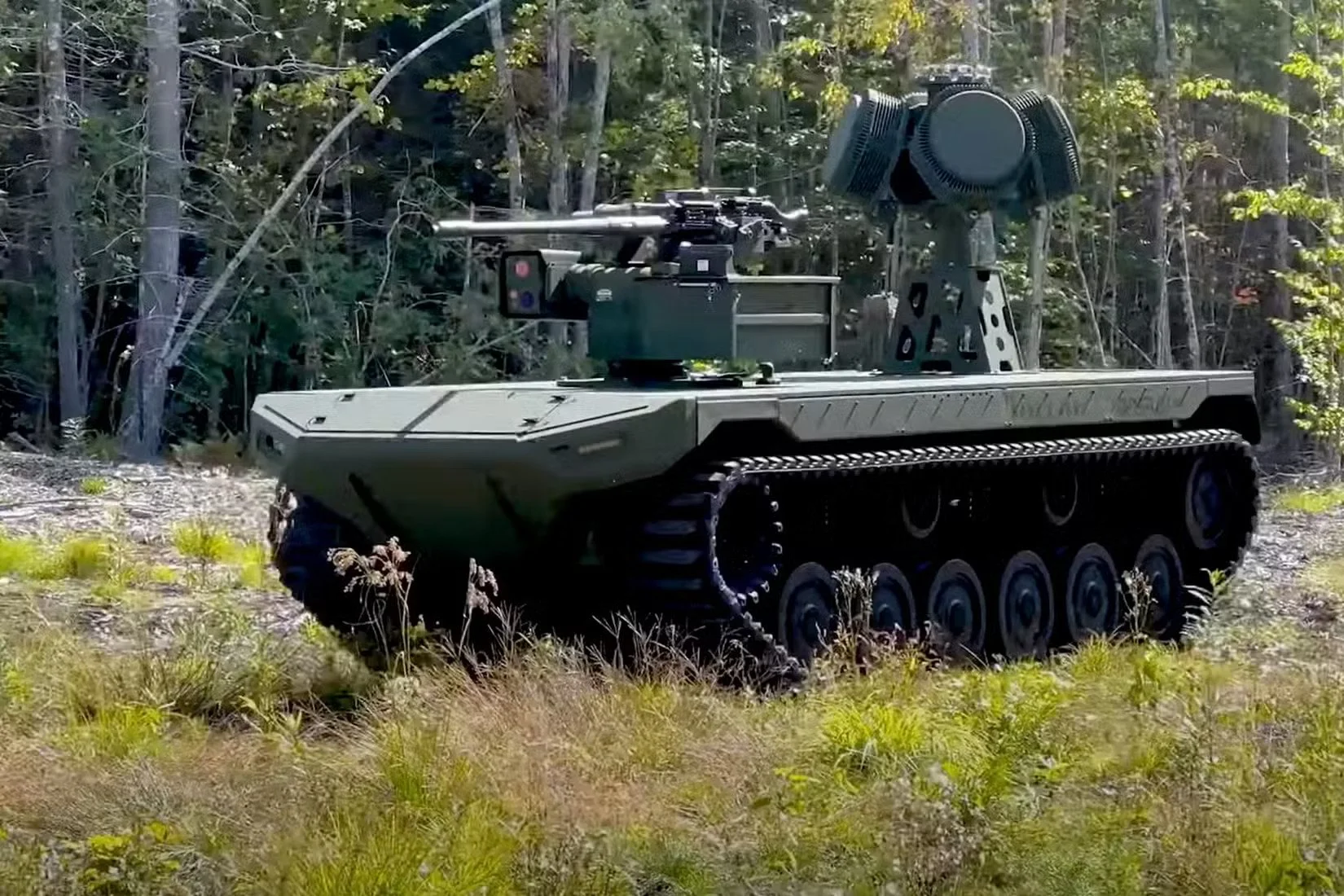
The Bigger Picture
The British Army's land drone swarm initiative is about more than building better robots.
It represents a broader shift in military thinking.
For decades, armed forces measured strength through platforms—tanks, ships, aircraft, and artillery systems. The emerging model emphasizes networks of autonomous systems working together across multiple domains.
The lesson from Ukraine is becoming increasingly clear: the future battlefield will not be dominated by individual robotic platforms. It will be shaped by the ability to deploy thousands of interconnected autonomous systems that can sense, move, communicate, and adapt as a collective force.
The first phase of the UK's land swarm program may appear modest—a software testbed completed in April 2026.
But history often shows that transformational military capabilities begin with software long before they appear as hardware on the battlefield.
The race to build robotic armies is no longer theoretical. It is already underway.
