When Automation Stood Up From Its Chair: A Disney Argument for the AI Age
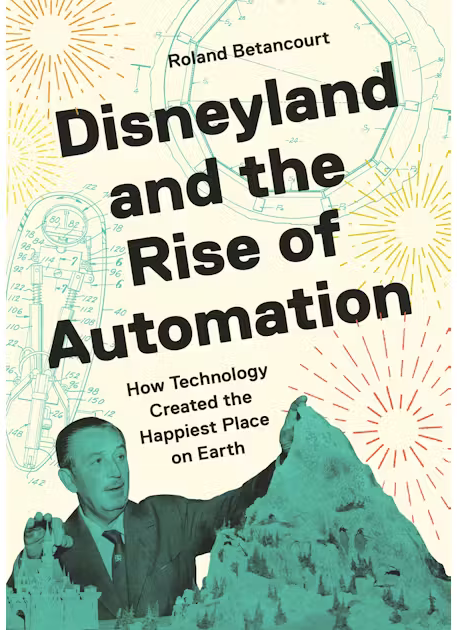
The trick of Roland Betancourt's Disneyland and the Rise of Automation is that he wants you to look at one of the most familiar places in American life and see something you've been trained your whole life not to see. Disneyland, he argues, is a factory. The product moving down the line is you. By the time you exit through the gift shop, the park has done something to you that no marketing campaign could have accomplished on its own: it has taught you to feel comfortable around machines designed to replace human labor.
That is a more aggressive claim than the book's gentle title suggests, and it is the claim that makes the book worth reading at this particular moment.
The argument
Betancourt's central thesis is that Disneyland, when it opened in Anaheim in 1955, did something the rest of American industry was struggling to do: it took the technologies of postwar factory automation — the same systems being deployed on Ford and GM assembly lines, the same control systems being used to test ballistic missiles, the same Programmable Logic Controllers that were quietly transforming American manufacturing — and re-presented them as entertainment.
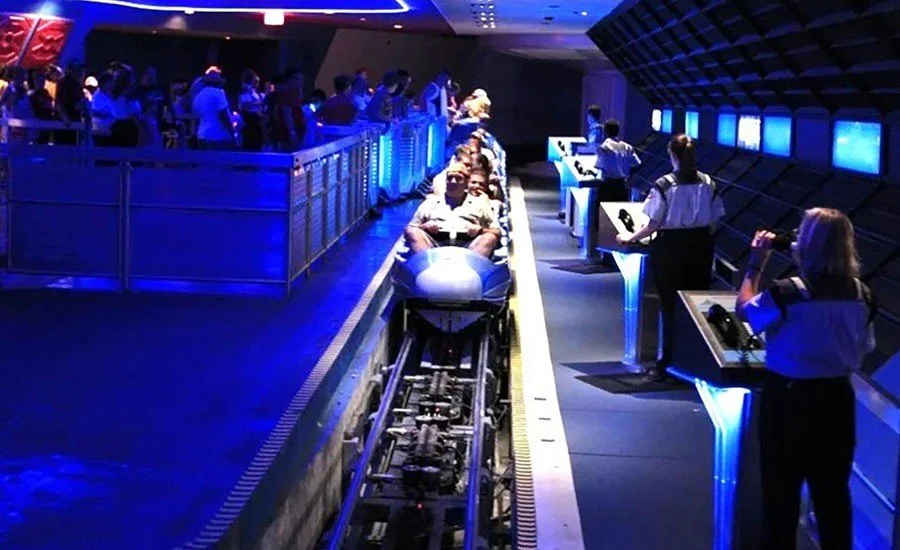
The magnetic tape that animated the talking macaws in the Enchanted Tiki Room was the same magnetic tape technology used to test ballistic missiles. The Programmable Logic Controllers that ran the Matterhorn Bobsleds and Space Mountain were the same controllers running automotive assembly lines. The ride systems, the show control, the queue management, the Audio-Animatronics — all of it was repurposed industrial infrastructure, restaged as wonder.
This wasn't incidental. Betancourt argues it was the entire point. In 1955, "automation" was a brand-new word, and it was on the cover of every major American magazine. Congress was holding hearings. Labor unions were sounding alarms. Blondie was running comic strips about workers being replaced by machines. The American public was profoundly anxious about what the new technologies of mass production were going to do to ordinary working lives.
And then Walt Disney built a place where you could pay admission and see automation perform charm. The robot Lincoln stood up from his chair and spoke. The pirates sang. The jungle came alive. Whatever automation was — whatever it was going to do to your job, your factory, your town — it was clearly also this: delightful, harmless, civic, a thing children laughed at.
Betancourt's claim is that this aestheticization mattered. Not just for Disney's bottom line, but for how an entire generation of Americans came to feel about the machines that were reorganizing their economic lives. The anxiety didn't disappear; it was reframed. Automation became something you went to see on weekends.
What the book does well
The research is the foundation. Betancourt — a Byzantine art historian by training, which is its own surprise — has spent years in Disney's corporate archives, in patent filings, in operational manuals, in technical drawings, and (by his own count) on more than 200 visits to the park itself. The result is a book densely populated with the kind of specific, granular detail that would have been impossible to produce from a more typical research base.
We learn about William Schmidt, whose innovative braking devices and ride control systems made Disneyland infinitely safer than its predecessors, and whose personality was so abrasive he was eventually pushed out (one Disneyland researcher of the era described him as "a mean bastard"). We learn about Minoru Yamasaki — the architect of the original World Trade Center towers — who quit the Magic Skyway project at the 1964 World's Fair because he found Disney's vision "undignified." We learn about the 1941 animators' strike that shook Walt Disney personally, and how the trauma of that strike informed his subsequent enthusiasm for technologies that could replace the human workers who had so disappointed him. The book is thick with these human stories sitting alongside the engineering history, and they keep what could have been a dry technological survey alive.
Betancourt is also unusually good at explaining how the technology actually worked — what the Audio-Animatronic figures were doing mechanically, how the show control systems sequenced events, why the magnetic tape was the breakthrough that made the Tiki Room possible. He writes about engineering with the patience of an art historian noticing that everything in a frame is there for a reason. The book's photographs, charts, and technical drawings, of which there are many, are well-chosen and integrated rather than decorative.
The strongest sections are the ones where Betancourt makes connections most readers will not have seen before. The Cold War military origins of show control. The labor history sitting underneath the Imagineers' work. The way Disney's design vocabulary — efficiency of crowd flow, optimization of throughput, predictability of guest experience — drew directly from Frank Bunker Gilbreth and the time-and-motion studies that defined scientific management at the start of the 20th century. By the time Betancourt is finished, you understand that Disneyland was not the opposite of the factory. It was the factory's PR campaign.
What the book argues less explicitly but means
This is where the book lands hardest in 2026. Betancourt is restrained about pushing the contemporary parallels too aggressively, but he doesn't have to. The reader makes the connection.
Right now, the American public is having essentially the same conversation about artificial intelligence that it was having about industrial automation in 1955. Will it free us from drudgery, or will it eliminate our jobs? Are the gains worth the disruptions? Should we be alarmed, or should we be excited? And running alongside that public conversation is something else: the rapid integration of AI into entertainment, into chatbots that feel like friends, into image generators that produce art on demand, into voice assistants that answer questions in pleasant tones. The technology that we are most anxious about is also, increasingly, the technology that we are most amused by.
Betancourt's point, though he leaves much of it for the reader to draw, is that this is exactly the pattern Disneyland established. When a technology becomes entertainment, it loses its edge. You can worry about ChatGPT taking your job and also use it to plan dinner. You can be anxious about humanoid robots replacing warehouse workers and also enjoy watching them dance on TikTok. The two attitudes coexist because the entertainment version of the technology is doing exactly what Disneyland's animatronics did in the 1950s: making the unfamiliar feel domesticated, the threatening feel charming, the industrial feel magical.
This is, depending on your disposition, either a fascinating insight into how societies metabolize disruptive technology, or a warning about how we get talked out of taking our own anxieties seriously. Betancourt mostly lets the reader decide, but the book's tone suggests he thinks both readings are correct and that they don't necessarily contradict each other.
What the book does less well
There are gaps. The book is largely silent on Disney's labor practices today — the costumed performers, the ride operators, the maintenance workers whose unions have spent decades negotiating with the company over wages and conditions. Given how central labor history is to the book's argument about 1955, it's striking that the contemporary labor reality of the parks gets less attention. The reader who finishes the book wondering what the cast member on Pirates of the Caribbean thinks about all this will not find an answer in these pages.
The book is also more interested in Disneyland than in the broader theme park industry. Universal Studios, Six Flags, the Knott's Berry Farm of the same era — these get glancing references but not sustained analysis. That's a defensible scope choice for a book this dense, but it does leave the reader wondering whether Disneyland's particular fusion of automation and entertainment was unique to Disney, or whether it was a pattern that other operators were running in parallel.
And Betancourt's prose, while consistently competent, occasionally drifts into the academic register that his Princeton colleagues will find unobjectionable but that general readers may find slow. The book is at its best when Betancourt forgets he is an art historian and lets himself simply tell the story.
The verdict
Disneyland and the Rise of Automation is the kind of book that changes what you notice. After reading it, you will not be able to walk through a theme park, or a fully automated warehouse, or any of the increasing number of spaces in American life where the human and the mechanical are becoming difficult to separate, without thinking about the argument Betancourt has made. That is the highest thing one can ask of a work of cultural history.
It is also a book that arrives at a useful moment. The robotics industry is racing to deploy humanoid platforms into factories, warehouses, and eventually homes. The AI industry is racing to integrate generative systems into every consumer product on the market. Both industries are betting that the public will accept these technologies once they get used to them. Betancourt's book is a reminder that "getting used to" a technology is rarely an accident. It is something that gets engineered, by people with budgets, in venues built for the purpose.
Disneyland was the first such venue at scale. It was not the last.
For readers in robotics, AI, manufacturing, or any field where the question of how the public comes to accept new machines is a live one, this book deserves a place on the shelf. For readers who simply love Disneyland and want to understand it better, it deserves the same place. The two audiences turn out, as Betancourt would say, to be the same.
