Argentina Opens Latin America’s First Fully Robotic Parcel Hub
Argentina has taken a major step into the future of logistics with the launch of Latin America’s first fully robotic parcel sorting hub, signaling a broader shift toward automation in the region’s postal and e-commerce infrastructure.
At its Monte Grande facility near Buenos Aires, Correo Argentino has unveiled a state-of-the-art robotic sorting center built in partnership with Libiao Robotics. The facility represents a milestone not only for Argentina’s national postal service but also for the modernization of logistics operations across Latin America.
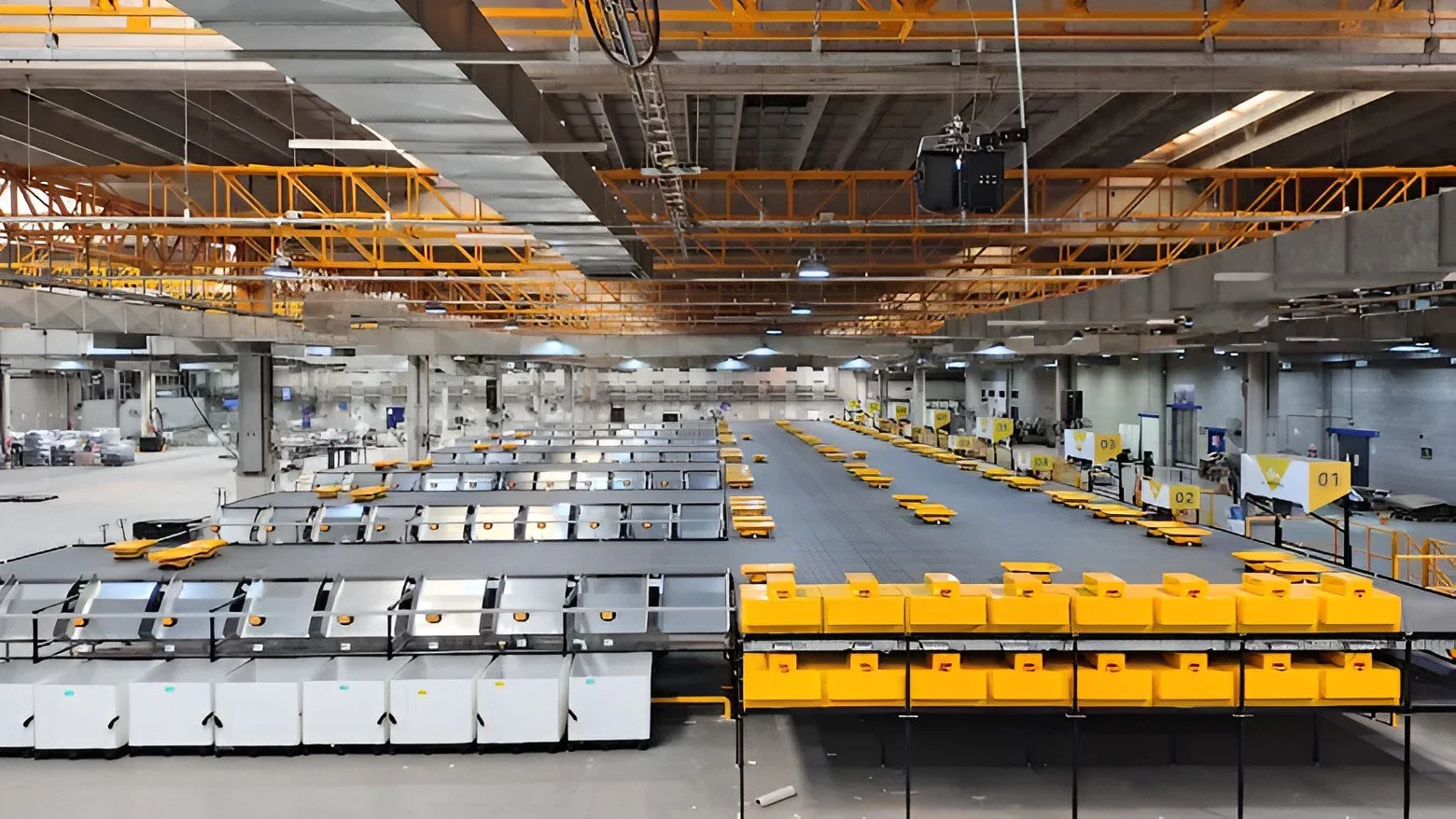
A Threefold Leap in Capacity
The new hub is powered by 240 autonomous mobile robots operating across 1,180 square meters. Together, they can sort up to 9,000 parcels per hour—tripling the site’s previous throughput.
Designed primarily for small and medium e-commerce parcels weighing up to five kilograms, the system handles the bulk of both domestic and international parcel flows. Parcels are inducted through 13 workstations, scanned via barcode and QR code recognition, and dynamically routed to 130 destination chutes serving 130 locations nationwide.
At the core of the system is Libiao’s T-Sort platform, which integrates artificial intelligence, advanced sensors, and real-time routing algorithms to achieve high-speed, high-accuracy sortation.
“This project demonstrates how intelligent robotics can transform postal and parcel operations, even in large, geographically diverse countries,” said Ronan Shen, Global Head of Sales at Libiao Robotics. “We are proud to support Correo Argentino in building a future-ready network that is faster, more accurate, and scalable.”
Why Robotic Sortation Matters
Unlike traditional conveyor-based systems, Libiao’s modular robotic architecture allows operators to scale capacity by adding robots or destinations rather than redesigning infrastructure. Key advantages include:
High throughput in compact spaces
Flexible reconfiguration as networks evolve
Improved sorting accuracy and reduced rehandling
Faster deployment timelines
Lower total cost of ownership through simplified maintenance
For postal operators facing rising labor costs, volatile demand peaks, and relentless e-commerce growth, robotic sortation offers a path toward operational resilience and long-term scalability.
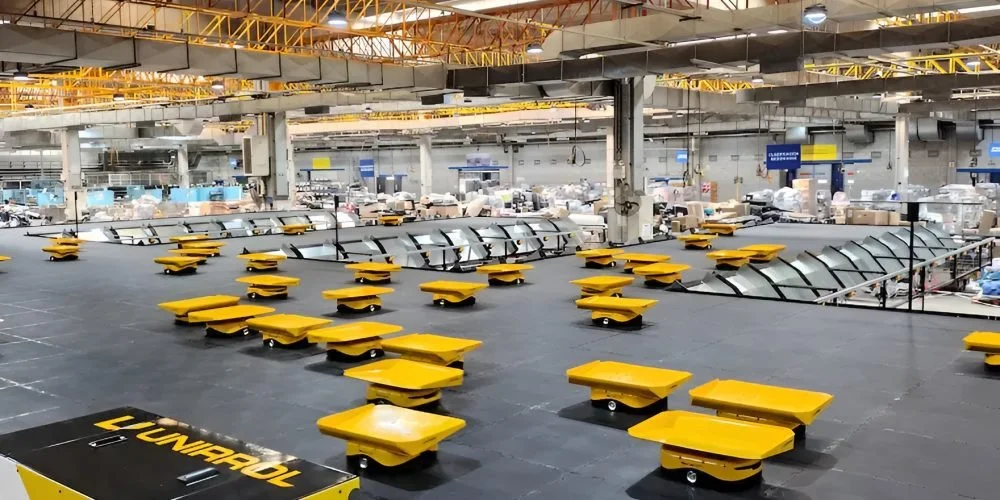
Part of a Broader Transformation
The Monte Grande installation is part of Correo Argentino’s wider modernization strategy, following a period of financial recovery and renewed investment in automation.
The company plans to deploy a second robotic sorter in 2026 capable of handling parcels up to 30 kilograms, alongside upgrades such as RFID tracking, automated weighing, and robotic container handling.
A Signal for Latin America
While robotic logistics systems are becoming standard in Europe, North America, and East Asia, large-scale deployments in Latin America have been comparatively rare. This project marks a turning point.
For Argentina, the new hub is more than a technological upgrade—it is a statement of intent. As global logistics networks become increasingly automated, the country is positioning itself not as a follower, but as an early adopter in the next wave of intelligent intralogistics.
For the broader industry, the message is clear: the future of postal and parcel operations is not conveyor belts and manual sorting—it is fleets of autonomous robots, AI-driven routing, and systems designed to scale at the speed of e-commerce.
