Robots have become reliable fixtures inside warehouses and factories, where tasks are repetitive and environments are carefully controlled. Construction sites are another matter entirely.
Layouts shift daily. Terrain changes. Workers and equipment move unpredictably. Those conditions have long made construction one of the hardest places to deploy autonomous machines.
Now a new partnership between Boston Dynamics and FieldAI aims to change that.
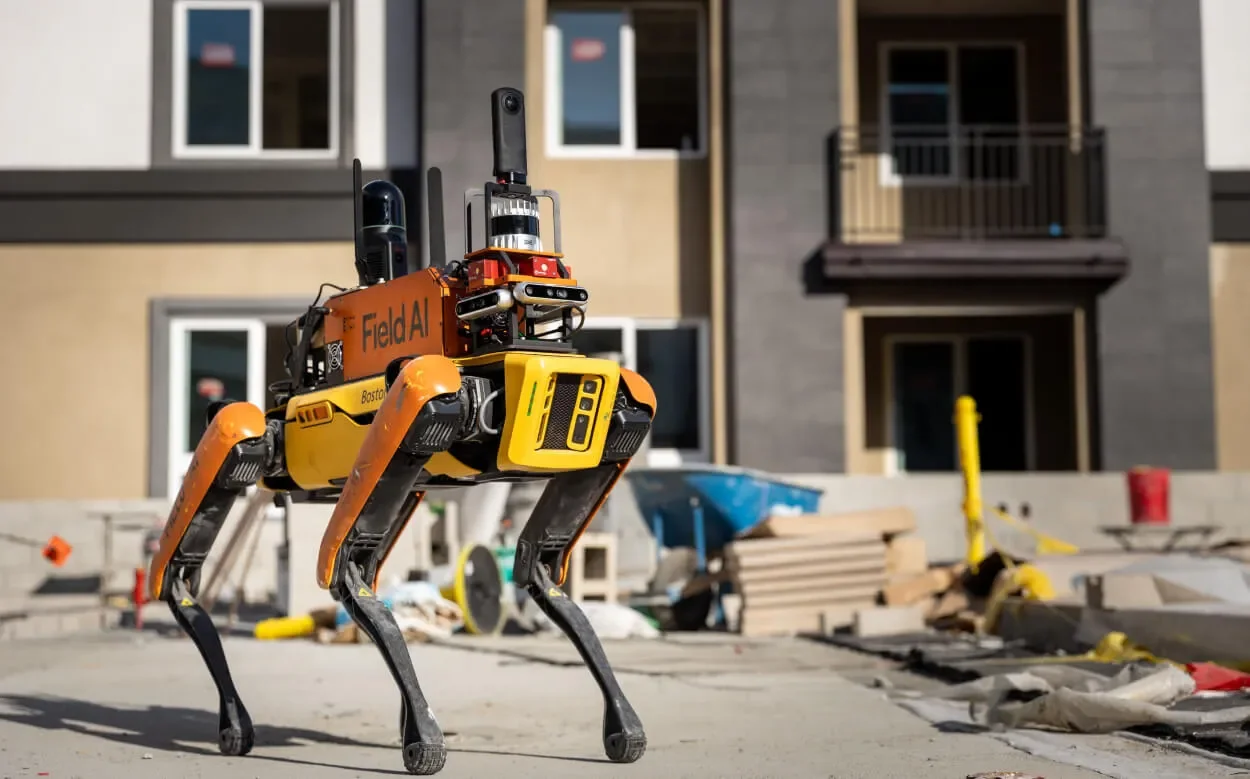
The companies said Thursday they are combining Boston Dynamics’ mobile robots with FieldAI’s artificial-intelligence software to allow machines to operate autonomously in environments that are constantly evolving. The effort focuses first on construction sites but could eventually expand to industries such as mining, energy and logistics.
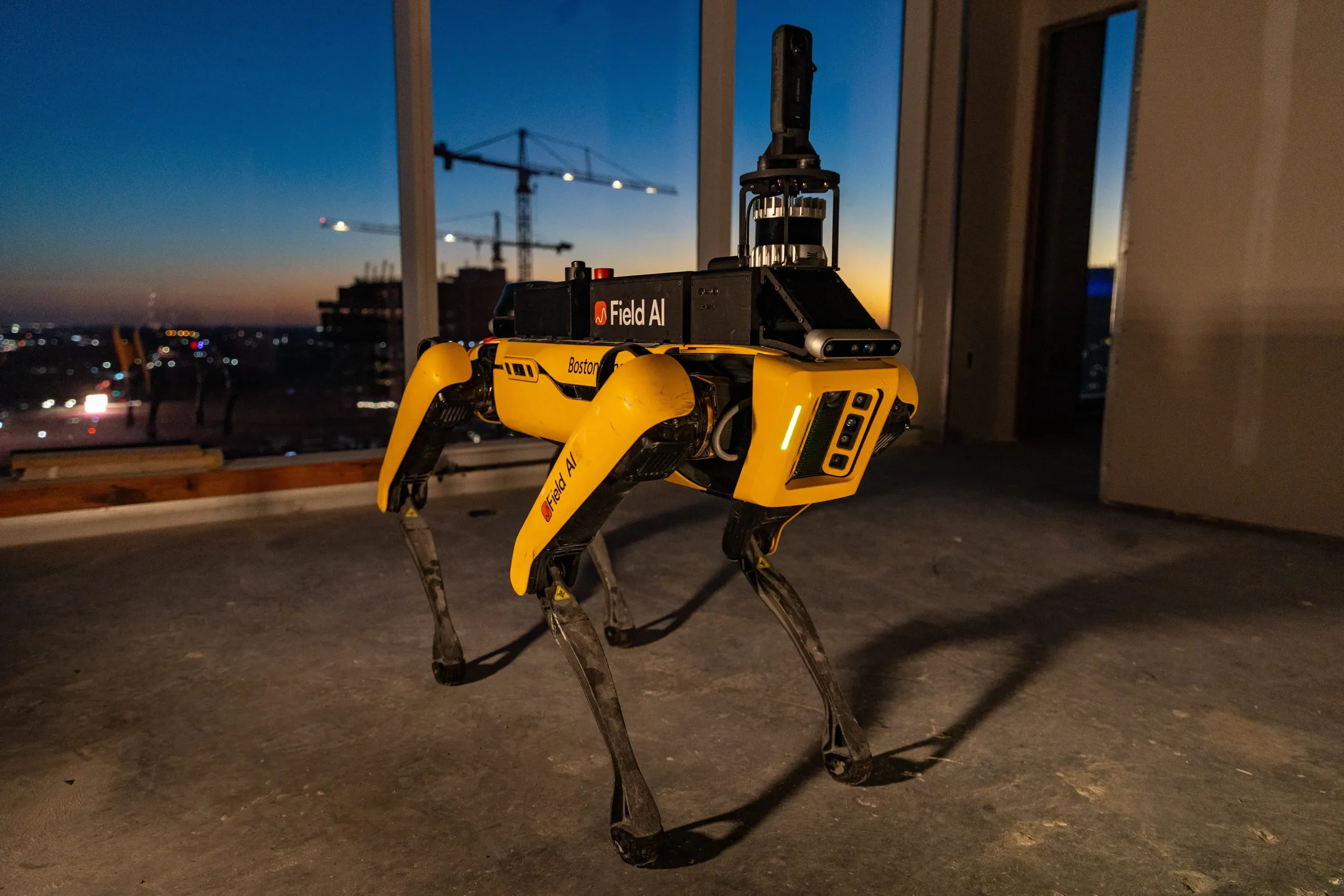
The collaboration pairs Boston Dynamics’ four-legged inspection robot, Spot, with FieldAI’s “Field Foundation Models,” a new type of AI designed specifically for physical machines operating in the real world.
Unlike many AI systems adapted from internet data or simulation environments, FieldAI’s models are designed to reason about uncertainty and risk in physical environments—situations where sensors can be imperfect and conditions change rapidly.
Construction sites offer a clear test case.
Capturing accurate data on job-site progress is labor-intensive and often inconsistent. Inspections require workers to walk large areas repeatedly, documenting hazards, verifying work and updating project records. These tasks are time-consuming and can expose workers to safety risks.
Robots equipped with the new system can autonomously navigate sites, conduct inspections and create 3-D scans that track progress against digital building models. The machines can also identify hazards such as standing water or blocked evacuation routes.
Marc Raibert, founder of Boston Dynamics, said the partnership grew out of previous collaborations with FieldAI’s team during robotics competitions and research programs.
“Combining FieldAI’s expertise in risk-aware autonomy with Spot’s mobility allows us to tackle uncharted and highly dynamic environments together,” Raibert said.
The companies say early deployments show significant productivity gains. Automated inspection and documentation can reduce the time required for those tasks by more than 90% compared with manual processes. Detecting problems earlier can also prevent costly construction rework.
For Boston Dynamics, the partnership represents an expansion beyond the industrial inspection work that has become the primary commercial use for Spot. The robot is already deployed in factories, power plants and other facilities where it performs scheduled monitoring tasks and collects operational data.
FieldAI’s technology is designed to push robots further—into environments without detailed maps, GPS signals or predefined routes. The software runs directly on the robot rather than relying on cloud connectivity, enabling operations in remote locations.
Ali Agha, founder and chief executive of FieldAI, said the key challenge is teaching robots to evaluate risk in real time.
“Complex real-world sites are unpredictable by nature,” Agha said. “The breakthrough is developing robots that can understand risk and make decisions on their own.”
Another aspect of the system is the ability to deploy fleets of robots that share information about their surroundings. Instead of operating as individual machines, multiple robots can coordinate tasks and maintain a shared understanding of the environment.
That approach could allow companies to deploy autonomous systems across multiple job sites, standardizing data collection and monitoring across projects.
Construction companies have increasingly experimented with robotics and automation as labor shortages persist across many markets. But most systems today remain limited to highly specific tasks.
If robots can reliably navigate and operate in constantly changing construction environments, executives say, the same technologies could expand into many other sectors.
“Construction is the proving ground,” said Marc Theermann, chief strategy officer at Boston Dynamics. “If robots can work here, they can work almost anywhere.”
