China’s Robot Production Surge Signals a New Phase in the Global Automation Race
China’s robot industry is accelerating at a remarkable pace, with new government data showing a sharp rise in industrial robot production during the first months of 2026. The numbers reinforce a broader strategy from Beijing: scale automation rapidly while positioning the country to lead the next wave of robotics, including humanoid systems.
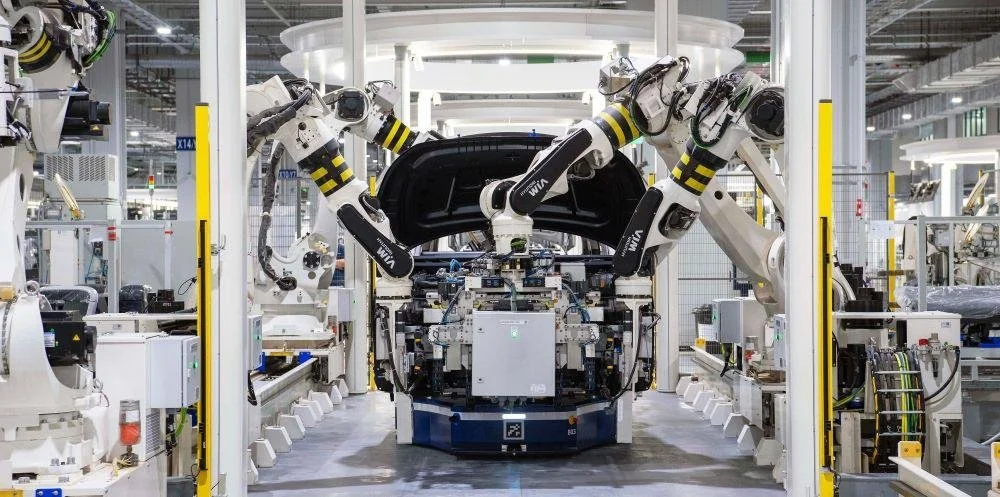
According to the National Bureau of Statistics, China produced 143,608 industrial robots in January and February, representing a 31 percent increase year-over-year. That growth rate exceeds the 27 percent increase recorded during the same period last year, when production totaled 91,088 units.
The surge continues an already powerful trend. In 2025, China produced 773,074 industrial robots, a 28 percent increase over the previous year, underscoring the country’s accelerating investment in factory automation.
Industrial Robots Lead the Growth
The expansion of industrial robot production reflects China’s ongoing push to modernize its manufacturing sector. Policymakers increasingly view automation as essential to maintaining competitiveness while offsetting rising labor costs and demographic pressures.
China already dominates global robot deployment. According to the International Federation of Robotics, the country accounted for 54 percent of all industrial robot installations worldwide in 2024. That year, Chinese factories installed approximately 295,000 industrial robots, far exceeding deployments in other major markets such as Japan (44,500 units) and the United States (34,200 units).
This scale advantage is reinforcing China’s role as both the largest market for robots and an increasingly powerful producer of them.
Service Robot Numbers Tell a Different Story
While industrial robots surged, the service robot sector showed far more modest growth.
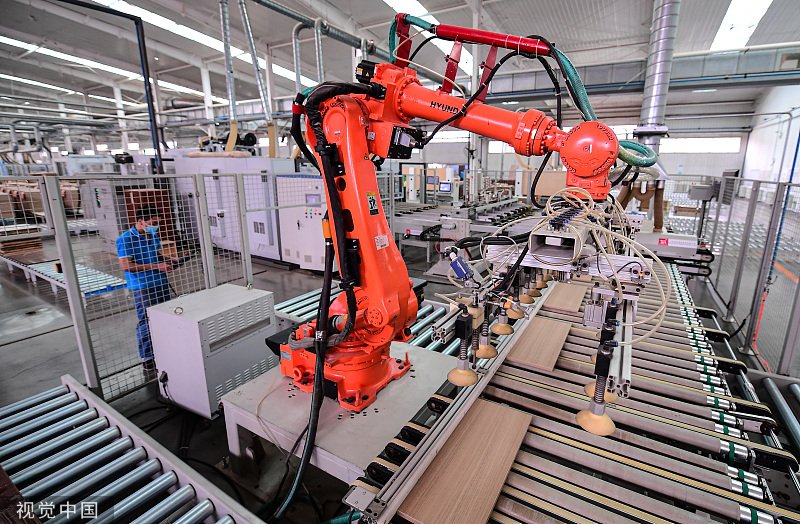
China produced 2.54 million service robots in the first two months of 2026, representing only 1 percent year-over-year growth. Officials say the slower pace partly reflects changes in statistical reporting, as new service-robot manufacturers were added to the government’s tracking system.
Even so, the segment remains large. Previously released data showed 1.49 million service robots produced in 2025, covering applications ranging from logistics and cleaning to consumer and hospitality uses.
The Next Target: Humanoid Robots
Beyond industrial automation, China is positioning itself to lead the next frontier in robotics: humanoid machines.
Major technology companies and manufacturing giants are investing heavily in the field. Xiaomi recently revealed tests of its internally developed humanoid robots on automotive assembly lines. According to the company, the robots were able to operate autonomously for three hours, completing assembly tasks without human intervention.
Founder Lei Jun has indicated that Xiaomi plans to deploy large numbers of humanoid robots across its factories within the next five years, suggesting the technology could become a significant component of the company’s manufacturing strategy.
Meanwhile, Shenzhen-based robotics firm UBTech Robotics announced a partnership with Siemens through its industrial software division. The collaboration aims to streamline humanoid robot design and manufacturing.
UBTech has set an ambitious target: producing 100,000 humanoid robots by the end of 2026.
Automation as National Strategy
China’s robotics expansion reflects a broader national strategy centered on what policymakers increasingly call “physical AI.” Robotics and embodied intelligence are viewed as key engines of future economic growth, alongside semiconductors and artificial intelligence.
The country’s approach combines government policy support, massive manufacturing scale, and aggressive corporate investment. Together, these forces are accelerating robot deployment across factories while laying the groundwork for more advanced machines.
If current production trends continue, China’s robotics ecosystem may soon dominate not only industrial automation—but the emerging global race to commercialize humanoid robots.
