A new wave of robotics aimed at transforming airport accessibility and operations is gaining momentum, as Canadian startup A&K Robotics announces an $8 million CAD ($5.85 million US) Series A funding round to expand deployment of its autonomous passenger mobility platform.
The round was led by BDC Capital’s Industrial Innovation Venture Fund and Vantage Futures, with additional participation from RiSC Capital, Grep VC, Nimbus Synergies, and notable tech investor Dan Gelbart. The investment signals growing confidence in robotics systems designed not for factories, but for complex, human-centered environments like airports.
Addressing a Growing Accessibility Gap
Airports are under increasing pressure to accommodate rising passenger volumes alongside a surge in accessibility needs. Approximately 17% of the global population lives with mobility challenges, while requests for airport assistance are growing 10–15% annually—outpacing overall passenger growth.
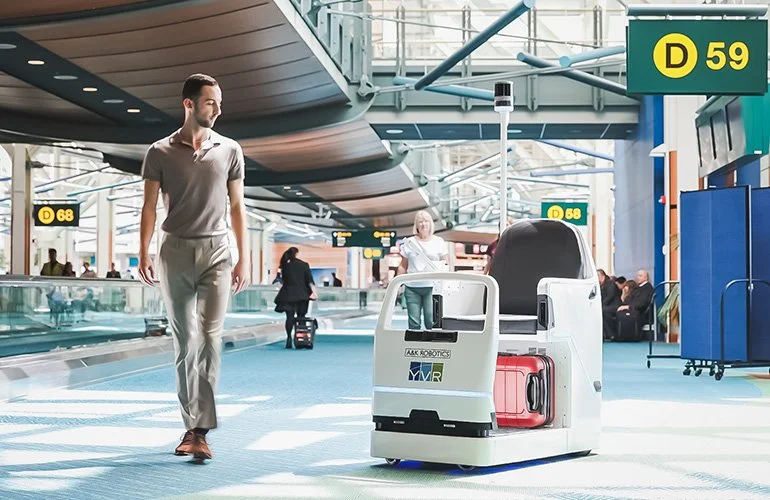
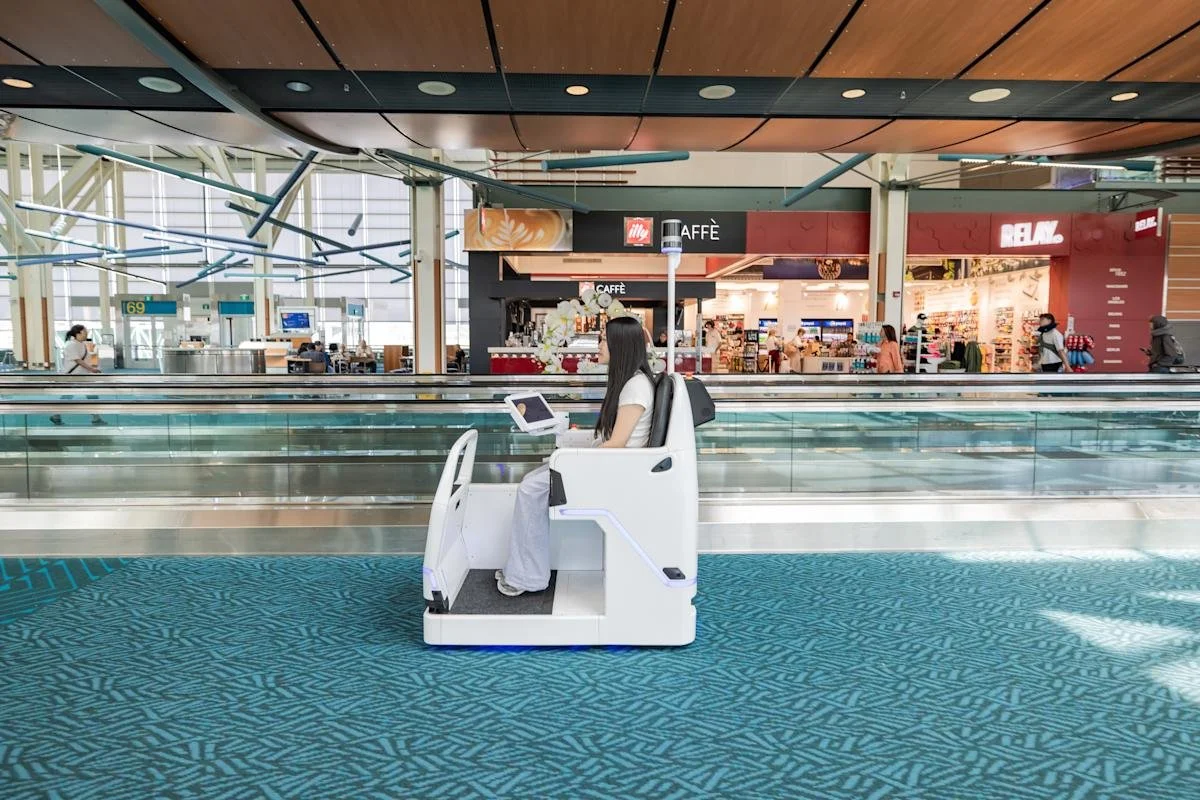
A&K Robotics is targeting this gap with its flagship system, Cruz™, a self-driving mobility robot designed to transport passengers through crowded terminals. Operating similarly to an indoor autonomous vehicle, Cruz allows users to select a destination and then navigates autonomously using onboard sensors and AI, dynamically adjusting to dense pedestrian traffic.
“Air travel is chaotic enough — getting to your gate shouldn’t be part of the problem,” said CEO Matthew Anderson, emphasizing the company’s focus on improving both accessibility and operational flow.
From Pilot to Infrastructure
Unlike many robotics companies still operating in controlled environments, A&K is already deploying its systems in live airport settings. Cruz units are currently operating at major hubs including Vancouver International Airport and Madrid-Barajas Airport, the latter managed by Aena, the world’s largest airport operator by passenger volume.
The company positions its technology as a new category: autonomous passenger mobility infrastructure—a shift from assistive devices to integrated systems embedded within airport operations.
COO Jessica Yip framed the challenge succinctly: while autonomy has matured in structured environments like warehouses, airports represent a far more complex test case, requiring navigation through unpredictable human movement at scale.
Scaling Production and Deployment
The new funding will support A&K’s transition from pilot programs to full-scale deployments. Plans include expanding manufacturing capacity from dozens to hundreds of units annually, alongside the development of new R&D and prototyping facilities in British Columbia.
As airports grapple with labor shortages, operational complexity, and rising expectations for accessibility, solutions like Cruz could become a standard component of future terminal design.
A Broader Shift Toward Physical AI in Public Spaces
A&K Robotics’ expansion reflects a larger trend: the movement of autonomous systems out of controlled industrial environments and into public infrastructure.
While autonomy in warehouses and logistics has become routine, deploying robots in shared, human-dense environments introduces new technical and governance challenges—from safety and reliability to integration with existing workflows.
The success of systems like Cruz may ultimately depend not just on the technology itself, but on how well airports adapt their operations to support it.
For now, A&K Robotics is betting that the future of mobility doesn’t just happen on roads—but inside the terminals where millions of journeys begin.
