How a Montréal Startup Plans to Own the “Touch Layer” of Robotics
As artificial intelligence moves from software into the physical world, a fundamental question is emerging: how do robots actually touch and feel?
From factory automation to surgical robotics, the ability to sense pressure, resistance, and interaction forces is quickly becoming one of the most valuable layers in robotics development. Montréal-based startup Haply Robotics believes it has identified a key piece of that future—and is positioning itself to become the interface between humans, machines, and the physical environment.
“There are going to be 10 billion robots on the planet by 2050,” said Haply co-founder and CEO Colin Gallacher. “They’re going to need steering wheels.”
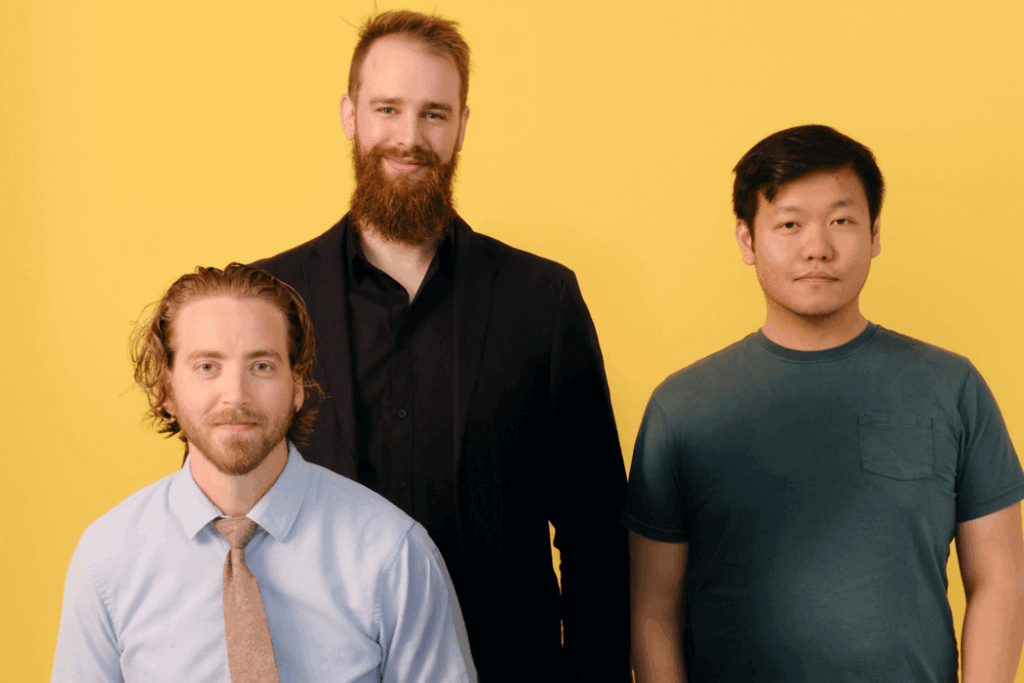
Building the Control Layer for Physical AI
Founded in 2018, Haply Robotics develops precision haptic controllers and software that allow users—and machines—to feel interactions in real time. Its technology captures movement and force data with microscopic precision, enabling robots to adjust their motion dynamically based on tactile feedback.
The company recently raised $11.75 million USD in a “seed-plus” financing round led by Sound Media Ventures, with participation from the Amazon Industrial Innovation Fund, Hanwha Asset Management Venture Fund, Two Small Fish Ventures, and BDC Capital’s Deep Tech Venture Fund. The investment brings Haply’s total funding to more than $20 million CAD and supports expansion into manufacturing, hiring, and global growth.
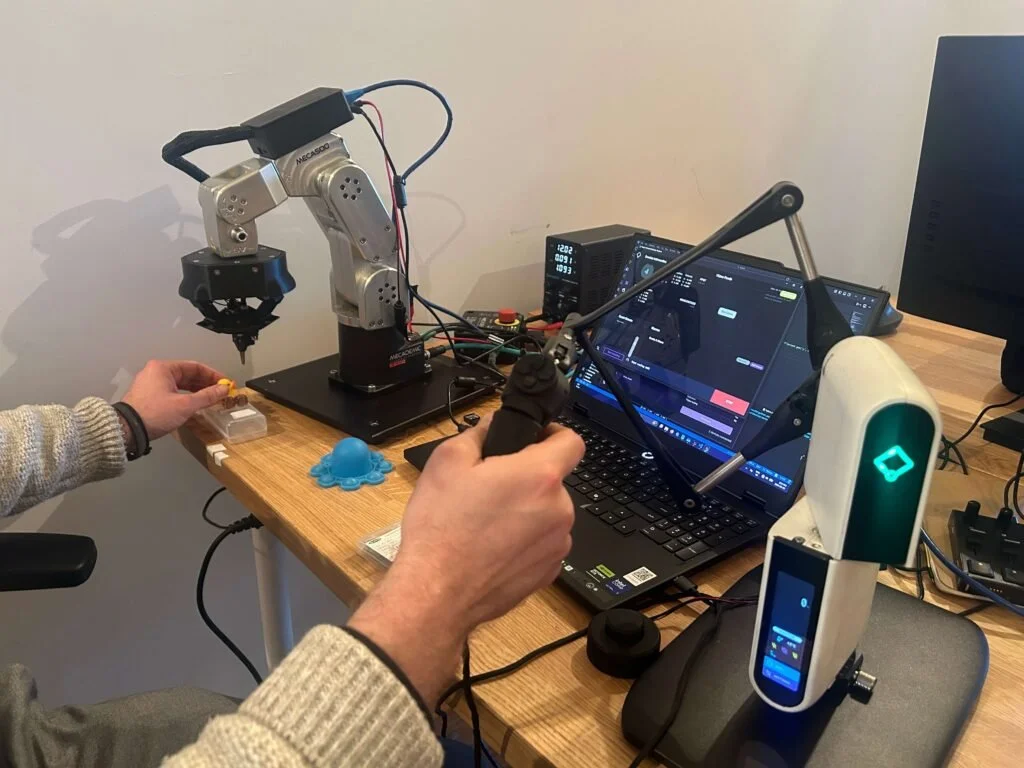
Haply’s core devices, including the Inverse3 and the smaller Minverse controller, act as advanced interfaces between operators and robotic systems. These tools allow users to feel digital textures, resistance, and motion while interacting with 3D environments or controlling robotic arms remotely.
The Rise of the “Touch Layer”
The idea of a dedicated tactile interface layer is gaining traction as robotics evolves into what many describe as “physical AI.” While advances in vision and autonomy have dominated headlines, haptics represents a quieter but critical frontier: giving machines the equivalent of a sense of touch.
“Like humans, robots will ultimately need the equivalent of five senses,” said Allen Lau of Two Small Fish Ventures. “The potential is that Haply can become one of the defining companies that owns the touch layer in robotics.”
That layer may prove foundational for industries where precision and safety are essential. Applications range from surgical robotics and remote industrial inspection to drone operation and microscopic manufacturing. Gallacher points to environments that are dangerous, remote, or require superhuman precision as key markets, including mining, oil and gas, and Arctic operations.
Data as Infrastructure
Beyond hardware, Haply’s long-term strategy appears centered on data. Every interaction captured through its devices generates motion and force datasets that could shape how AI systems learn to manipulate the real world.
This aligns with a broader shift in robotics, where sensing and control interfaces increasingly define competitive advantage. Haply has already collaborated with NVIDIA on demonstrations using the Omniverse platform, signaling an effort to embed tactile feedback into digital twins and simulation-driven development workflows.
The company reports more than 150 customers, including approximately 30 Fortune 500 enterprises, and claims year-over-year growth of 150 percent. Its technology has also gained visibility through awards at CES, where hands-on demonstrations highlighted the realism of its force feedback systems.
Canada’s Physical AI Moment
Haply’s growth comes amid a wider surge in Canadian robotics and physical AI investment. Companies like Waabi and Vention have recently raised significant funding rounds, reflecting rising interest in systems that combine AI with real-world interaction.
For Haply, the next phase includes opening a California office, expanding manufacturing capacity, and scaling a team currently numbering around 50 employees.
If successful, the company’s ambition goes beyond building devices. It aims to define how humans and machines physically communicate—a role that may bec
