North Carolina College Helps Bring Robotics to Upholstery Manufacturing
Catawba Valley Community College is helping position North Carolina at the forefront of a new wave of automation in furniture manufacturing, bridging traditional upholstery craftsmanship with emerging robotics technology.
Through its Furniture Academy and Manufacturing Solutions Center, Catawba Valley Community College (CVCC) has partnered with engineering students from Columbia University to help develop what is believed to be the first robotic system designed specifically for upholstery production. The collaboration connects one of the nation’s historic furniture regions with a new generation of robotic innovation.
The work emerged from Columbia University’s Campbell Center for Entrepreneurship, which awarded $230,000 in prizes in its 2025 startup venture competition. The $25,000 first prize in the Technology Challenge went to Kathedra, a startup founded by Columbia affiliates David Faes, Dimitris Anastasious and Oliver Davila Chasan. The company is focused on building robotic systems to assist upholstery manufacturers, rather than replace skilled workers.
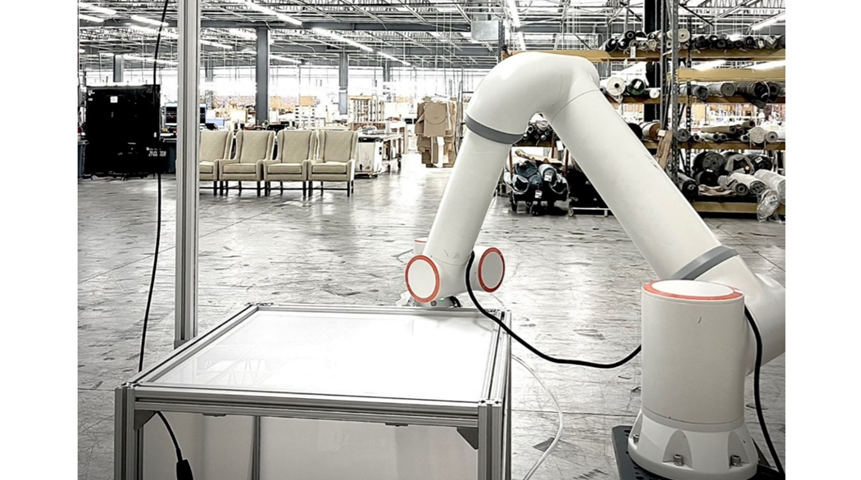
Kathedra is working in partnership with Standard Bots, based in Glen Cove, New York, the only American manufacturer of robotic arms. Together, the teams aim to bring advanced robotics into domestic furniture manufacturing to improve ergonomics, support skilled labor and enable more flexible, custom production.
Kathedra’s robotic upholstery assist program is designed to reduce physical strain on upholsterers while maintaining the craftsmanship required in a $180 billion global upholstered furniture market. The system is intended to help manufacturers scale just-in-time and customized production without sacrificing quality.
In 2024, Chasan and Faes began collaborating with the CVCC Furniture Academy, conducting on-site research and engaging directly with workers, designers and manufacturers. Their work included visits to the Furniture Academy and the High Point Market, where they gathered feedback from across the industry.
“It’s been incredible to connect with designers, manufacturers and retailers about the future of the industry and how new tech can drive design innovation, streamline supply chains and reshape the future of work,” Chasan said following their visit to High Point Market in April.
After completing their research, the team built a working prototype in just 30 days. They transported the system to North Carolina to demonstrate it to industry leaders, marking a key milestone in moving the concept from research to real-world application.
In October, Kathedra took the next step by moving into incubator space at the CVCC Manufacturing Solutions Center. There, CVCC staff and Furniture Academy leaders are helping connect the startup with furniture manufacturers and suppliers across the region.
“That is the special value CVCC brings to Kathedra,” said Gary Muller, CVCC’s executive dean of economic development and corporate education. “The combination of our Manufacturing Solutions Center and the Catawba Valley Furniture Academy enables Kathedra to gain access to key manufacturers.”
Following weeks of factory tours and hands-on learning across upholstery production lines, Kathedra has established partnerships with several furniture manufacturers, complementing its ongoing work with CVCC.
“From our first conversations to live demos and deployment, we are building our business alongside the people who make American furniture what it is today,” Chasan said.
For CVCC, the partnership reflects a broader strategy: training the next generation of furniture workers while ensuring that North Carolina manufacturers can adopt advanced technologies that strengthen competitiveness, preserve skilled jobs and modernize one of the state’s most enduring industries.
