Siemens and Partners Launch the UK’s First Fully Customisable AMR Manufacturing Capability
The future of manufacturing logistics is not arriving through massive infrastructure overhauls or rigid automation systems bolted onto legacy processes. Instead, it is emerging through flexible, intelligent mobility — and a new partnership between Siemens, Expert Technologies Group, and RMGroup signals that the United Kingdom intends to play a central role in shaping that future.
At its core, this collaboration represents more than the launch of a new product. It reflects a strategic shift toward domestic capability in autonomous mobile robotics (AMRs), a sector that has historically relied heavily on imported platforms and overseas integration teams. By bringing together Siemens’ industrial automation technology with UK-based robotics engineering and integration expertise, the partnership aims to establish the country’s first fully customisable AMR manufacturing capability — an end-to-end solution designed specifically for British manufacturers.
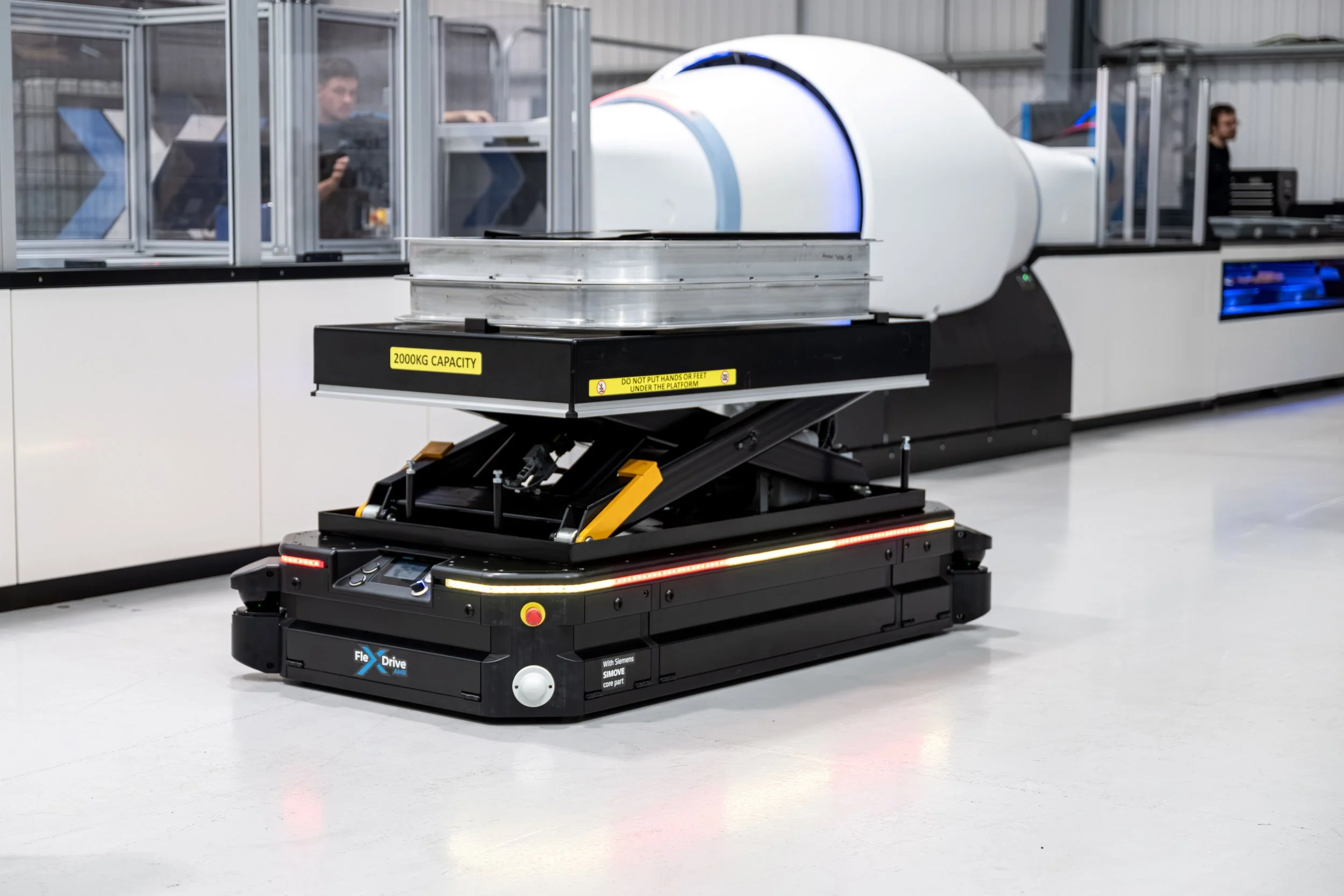
The promise of AMRs lies in their adaptability. Unlike traditional automated guided vehicles (AGVs), which often require fixed tracks or dedicated infrastructure, AMRs rely on onboard sensors, advanced navigation systems, and intelligent control software to move freely through dynamic environments. This infrastructure-light approach enables manufacturers to rethink internal logistics without committing to costly physical redesigns. Materials can flow between workstations more efficiently, production lines can be resupplied autonomously, and warehouse operations can adjust to changing layouts or demand patterns in real time.
Yet, despite their advantages, AMR deployments have frequently struggled with integration challenges. Companies adopting overseas systems have sometimes found themselves navigating mismatched standards, inconsistent support, or solutions designed for different regulatory and operational contexts. The new partnership directly addresses these challenges by emphasizing local development, local support, and customisation rather than one-size-fits-all robotics.
Technologically, the initiative builds on Siemens’ SIMOVE platform, which provides scalable control architecture and enables integration with broader digitalisation strategies, including warehouse management systems and digital twin simulations. Expert Technologies Group contributes its FlexDrive AMR platform, offering advanced navigation and real-time positioning capabilities, while RMGroup integrates laser-based navigation and wireless safety technologies that allow robots to operate safely alongside human workers in busy environments.
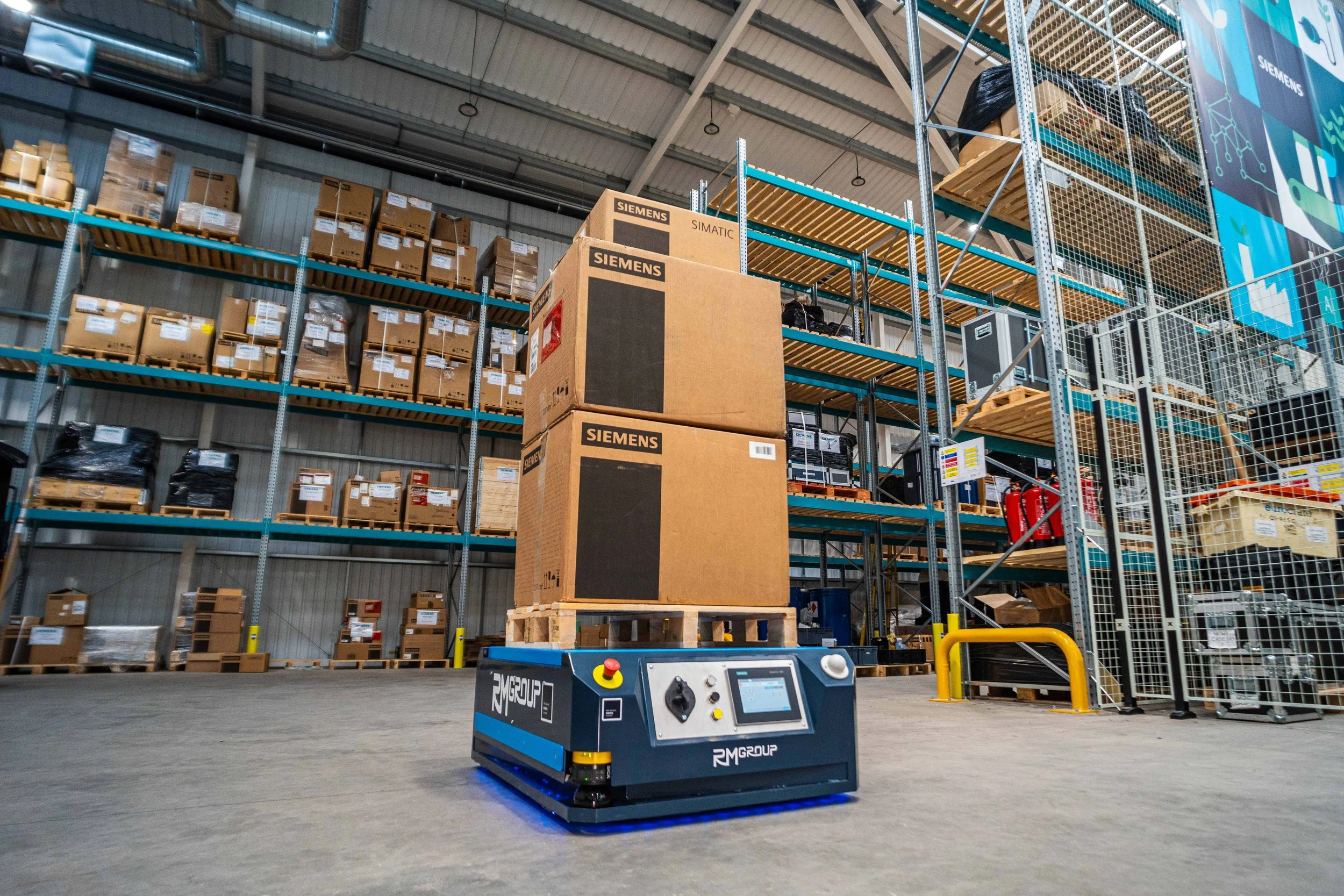
But beyond technical specifications, the collaboration highlights a deeper trend reshaping industrial automation: the convergence of robotics, connectivity, and financial models. Industrial Wi-Fi, 5G-enabled operations, and flexible financing structures are increasingly seen as essential components of successful robotics adoption. Automation is no longer just about hardware; it is about creating deployable ecosystems that lower risk and accelerate time to value.
In many ways, this initiative reflects broader pressures facing UK manufacturing. Global competition, workforce challenges, and the need for productivity gains have intensified calls for digital transformation. By developing a domestically anchored AMR ecosystem, Siemens and its partners are positioning autonomous mobility not merely as a technological upgrade, but as an industrial strategy — one that emphasizes resilience, flexibility, and innovation rooted within the UK itself.
As these systems begin to roll out, the real test will not be whether AMRs can navigate factory floors — that capability is already proven — but whether integrated, locally supported solutions can finally bridge the gap between promising pilots and sustained operational transformation.
