The Greenhouse Goes Autonomous: eternal.ag Raises €8M to Rebuild Agriculture from the Inside Out
A quiet transformation is underway inside Europe’s greenhouses—and it’s not just about plants. It’s about labor, resilience, and the growing realization that the future of agriculture may depend less on people in the fields and more on robots between the rows.
German startup eternal.ag has raised €8 million to accelerate that future, developing autonomous robots designed to harvest crops without human intervention. Backed by investors including Simon Capital, Oyster Bay Venture Capital, EquityPitcher Ventures, and Backbone Ventures, the company is positioning itself at the center of a structural shift in food production.
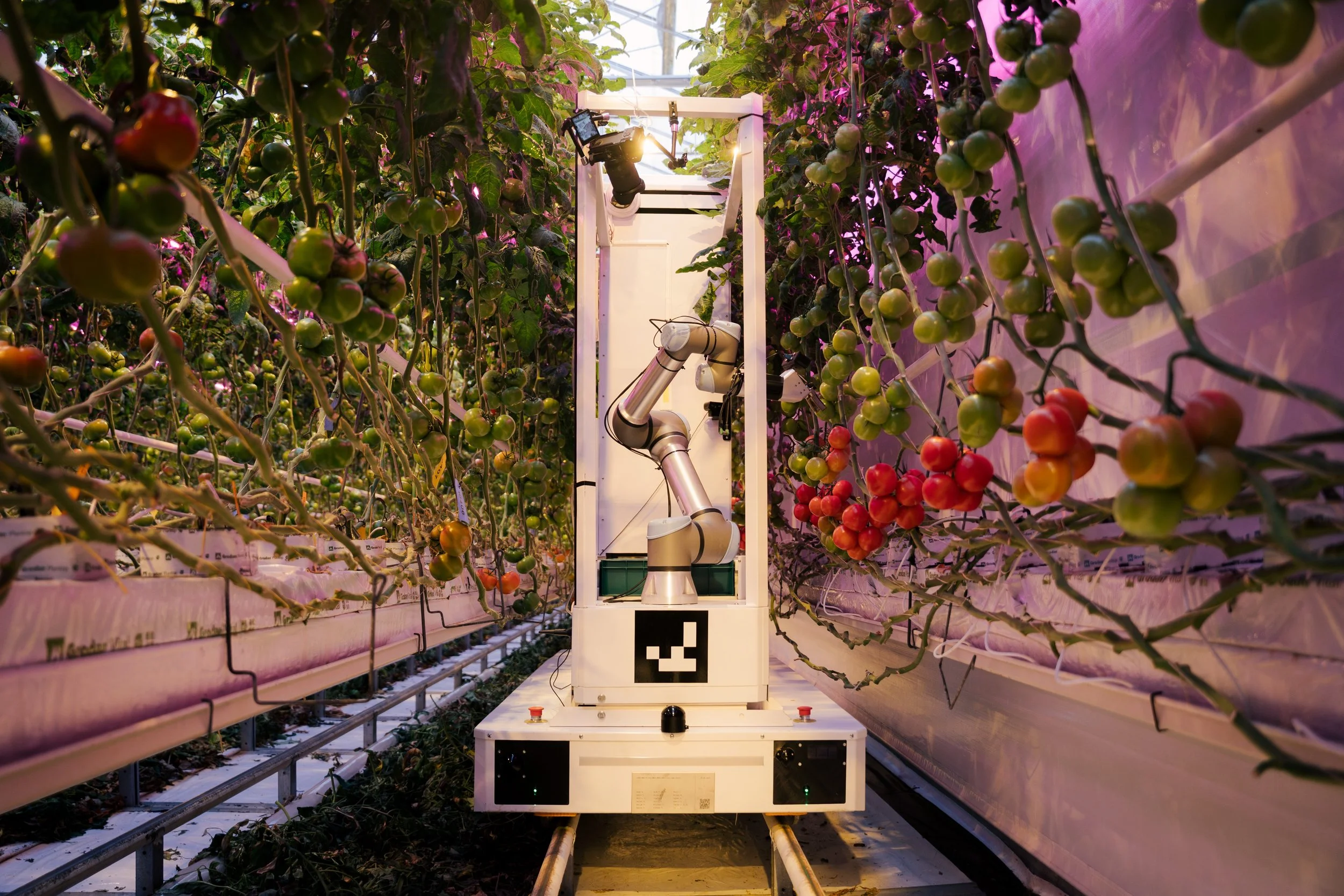
The robot picking your tomatoes
A Labor Problem That Robots Are Uniquely Positioned to Solve
Greenhouses have become one of the most reliable ways to produce food in an era defined by climate volatility. They offer protection from weather extremes, pests, and land constraints, enabling year-round cultivation of fruits and vegetables.
But they have a problem.
Labor availability in European agriculture has declined sharply—by as much as 30% since 2010—and the trend is expected to continue. Greenhouses, despite their controlled environments, still depend heavily on manual work, particularly for harvesting delicate crops like tomatoes.
This is where eternal.ag is placing its bet: not just on automation, but on full autonomy.
From Assisted Tools to Autonomous Systems
The company’s flagship product, Harvester, is a fully autonomous robot built specifically for tomato greenhouses. It operates up to 22 hours per day, navigating rows, identifying ripe produce, and executing consistent cuts—all without a human operator.
But the real innovation is not just the robot itself. It’s the system around it.
eternal.ag is building an AI-driven feedback loop, where every action taken by the robot feeds data back into the system. Over time, this allows the platform to learn from variability—differences in plant growth, layout, and environmental conditions—improving performance at scale.
CEO and co-founder Renji John describes the approach as “simulation-first development,” where robots are trained and tested in virtual greenhouses before deployment. This dramatically shortens development cycles, reducing iteration timelines from months to days.
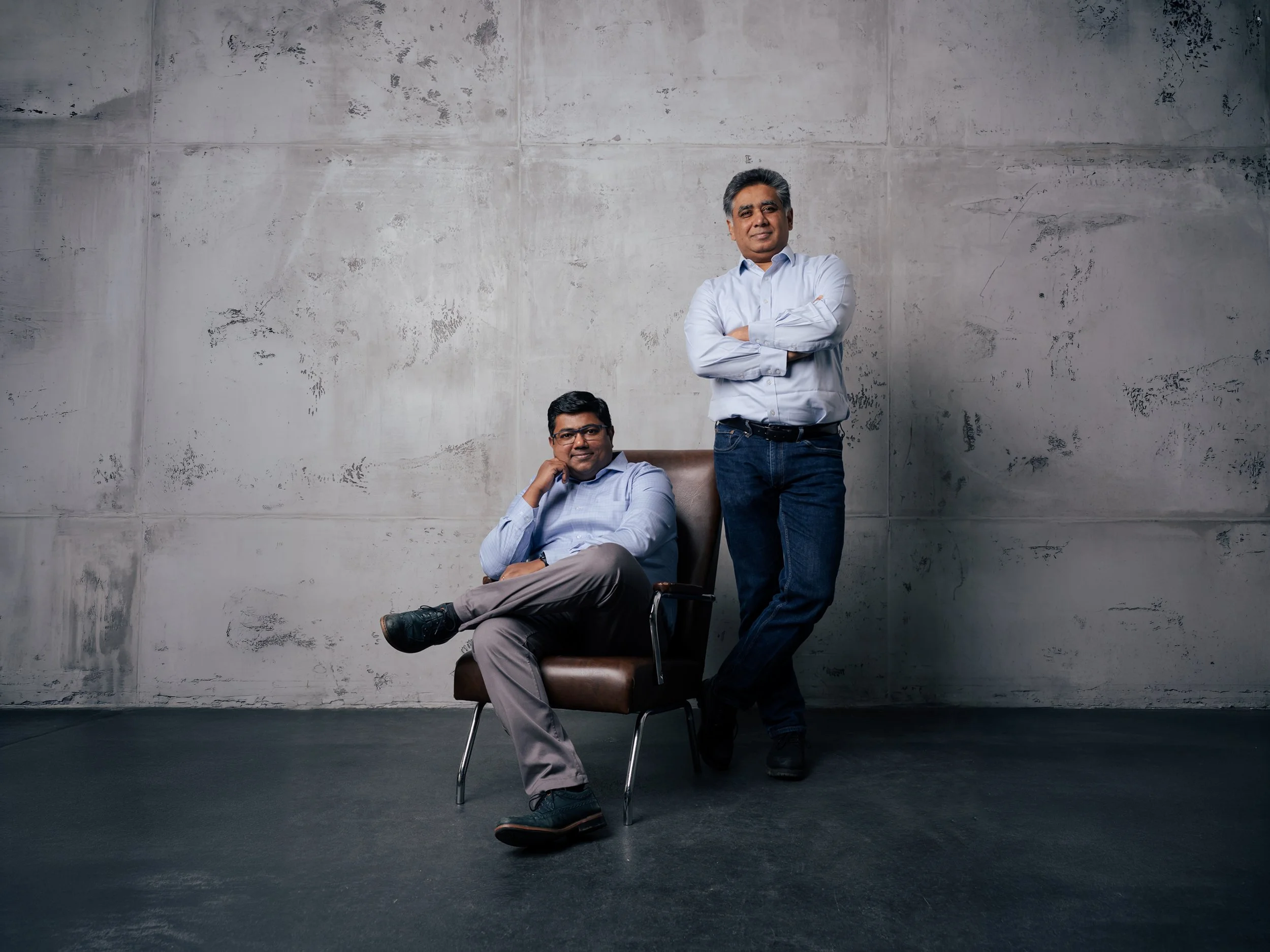
eternal.ag's co-founders Renji John (L) and Sherry Kunjachan (R)
Toward the Fully Autonomous Greenhouse
The long-term vision is ambitious: by 2040, eternal.ag aims to enable fully automated greenhouse operations, where planting, monitoring, and harvesting occur without manual labor.
The Harvester robot is just the starting point. Built as a modular system, the platform is designed to expand into additional tasks and crop types, extending automation beyond tomatoes into broader horticulture.
For investors, the logic is clear.
As Niklas Leske notes, greenhouse farming is already one of the most efficient and sustainable methods of food production. But without solving labor constraints, its scalability is limited. Robotics, in this view, is not just an efficiency upgrade—it’s a necessity.
Agriculture as the Next Frontier for Physical AI
What makes this moment particularly interesting is how closely it mirrors trends in manufacturing and logistics. Just as factories have moved toward lights-out automation, greenhouses are now emerging as candidates for similar transformation.
This is physical AI applied to biology—robots operating in semi-structured environments where variability is constant, not exceptional.
And that’s the real challenge.
Unlike factory floors, plants grow unpredictably. Leaves obscure fruit. Lighting changes. Layouts vary. The success of companies like eternal.ag will depend on whether their systems can handle that complexity at scale.
A New Kind of Farm
With headquarters in Cologne and operations spanning Europe and India, eternal.ag is still early in its journey. But its direction is clear.
The greenhouse of the future may not just be climate-controlled. It may be labor-independent.
And if that vision holds, the implications extend far beyond agriculture—reshaping supply chains, food security, and the economics of how we grow what we eat.
